When Assistance Dog Partnerships Fail: The Hidden Systemic Gaps and Unseen Costs in the Sector

Author: virtualsupportsuperstars

Author: CLW Consulting

In the assistance animal sector, there is a strong focus on placement, accreditation, and successful working teams. Less visible—but increasingly common in practice—is what happens when an assistance dog partnership is not sustainable.

As a consulting organisation that regularly receives referrals from assistance dog training organisations, independent trainers and breeders, animal rescue organisations, veterinarians, medical practitioners and allied health professionals, we work in a part of the system that is rarely acknowledged publicly: the point where an assistance dog can no longer remain in its original placement and must be transitioned into a new role or a new home.

So far this financial year, we have taken 22 dogs from failed or unsustainable assistance animal placements and supported both the animals and their handlers into more appropriate pathways. These cases are not isolated incidents—they reflect systemic gaps in assessment, education, oversight, and ongoing suitability monitoring.

The issue is not that assistance dogs are ineffective. The issue is that the current pathways into assistance dog ownership and training are often fragmented, inconsistently assessed, and insufficiently supported over time.

The Hidden Cost of Failed Assistance Dog Placements

When an assistance dog partnership breaks down, the costs extend far beyond the visible rehoming of the animal. These costs are financial, emotional, clinical, behavioural, and systemic.

1. Emotional and psychological costs to handlers

Many handlers experience significant emotional distress when an assistance dog partnership fails. This often includes:

  • Grief and attachment loss similar to bereavement
  • Increased anxiety or loss of independence
  • Feelings of failure or self-blame
  • Loss of trust in services or professionals

For some individuals, the assistance dog becomes part of their identity and daily functioning. When the placement collapses, it can destabilise their entire support system.

2. Welfare impacts on the dog

Dogs placed into assistance roles without sustained suitability may experience:

  • Chronic stress in high-demand environments
  • Behavioural deterioration due to mismatch of temperament and task load
  • Confusion due to inconsistent handling or expectations
  • Burnout from prolonged exposure to unsuitable working conditions

Even when no overt behavioural “failure” occurs, welfare compromise can be subtle and cumulative.

3. Financial costs to individuals and organisations

The financial investment in assistance dogs is substantial. Costs often include:

  • Breeding or acquisition fees
  • Veterinary care and health testing
  • Professional training and behaviour modification
  • Equipment and mobility or access aids
  • Travel, assessment, and public access training
  • Ongoing handler education

When placements fail, much of this investment is not recoverable. In addition, organisations incur further costs in:

  • Reassessment and rehoming
  • Retraining or behavioural rehabilitation
  • Administrative oversight
  • Emergency intervention when breakdown occurs

These are rarely factored into program design or publicly reported outcomes.

4. System capacity strain

Every failed placement places additional pressure on already limited rescue, rehabilitation, and rehoming services. Dogs that could have succeeded with earlier intervention or better matching instead require secondary pathways that are more resource-intensive and time-consuming.

5. Opportunity cost for the handler

Perhaps the least discussed cost is time. Many handlers spend months or years in training programs only to discover:

  • the dog is not suitable, or
  • the partnership is not sustainable, or
  • their needs would have been better met through alternative supports

This delays access to more appropriate interventions.

Why These Failures Are Repeating

The pattern is not random. Across many cases, similar structural weaknesses appear repeatedly in how assistance dog pathways are designed and managed.

1. Insufficient pre-enrolment assessment

In many systems, entry into assistance dog programs relies heavily on limited screening—often a GP letter or brief medical confirmation that the proposed handler’s disability meets the definition put forth by the Disability Discrimination Act 1992 (Cth) and the assistance animal may be beneficial.

While medical input is important, a GP tick-box confirmation alone cannot assess:

  • functional capacity for animal handling
  • behavioural consistency in training environments
  • environmental suitability (home, work, community access)
  • long-term sustainability of care responsibilities
  • cognitive load required to manage an assistance animal partnership

Assistance dog suitability is not purely medical—it is functional, behavioural, environmental, and relational.

A GP letter alone cannot evaluate that complexity.

2. Inadequate multi-disciplinary input before placement

A major systemic gap is the lack of mandatory input from a full stakeholder network before a person enters a structured assistance dog training program.

A robust pathway should include, at minimum:

  • Occupational therapy or functional capacity assessment
  • Veterinary behavioural and physical (structural) suitability screening for the dog
  • Qualified assistance dog trainers with relevant accreditation
  • Breeders or early-life behavioural evaluators (where relevant)
  • The handler’s broader support network (family, carers, support workers where applicable)

Without this integrated assessment, placement decisions are often made on partial information.

3. Over-reliance on early optimism rather than functional readiness

Many individuals enter assistance dog pathways during periods of crisis or high need. In these moments, hope often outweighs functional readiness assessment.

This can lead to:

  • Underestimating training complexity
  • Overestimating personal capacity to maintain consistency
  • Misjudging environmental constraints
  • Assuming a dog will resolve broader systemic support gaps

An assistance dog is a support system, not a standalone solution.

4. Inadequate ongoing monitoring

Even where organisations conduct follow-up, this is often limited to:

  • Annual phone calls
  • Self-reported progress updates
  • Informal check-ins with no structured assessment tool

This is insufficient for a high-risk, high-responsibility intervention involving both animal welfare and human safety.

By the time issues are reported in such systems, breakdown has often already occurred.

Ongoing monitoring should include:

  • Structured behavioural and welfare assessments of the dog
  • Objective review of handler capability and consistency
  • Environmental re-evaluation
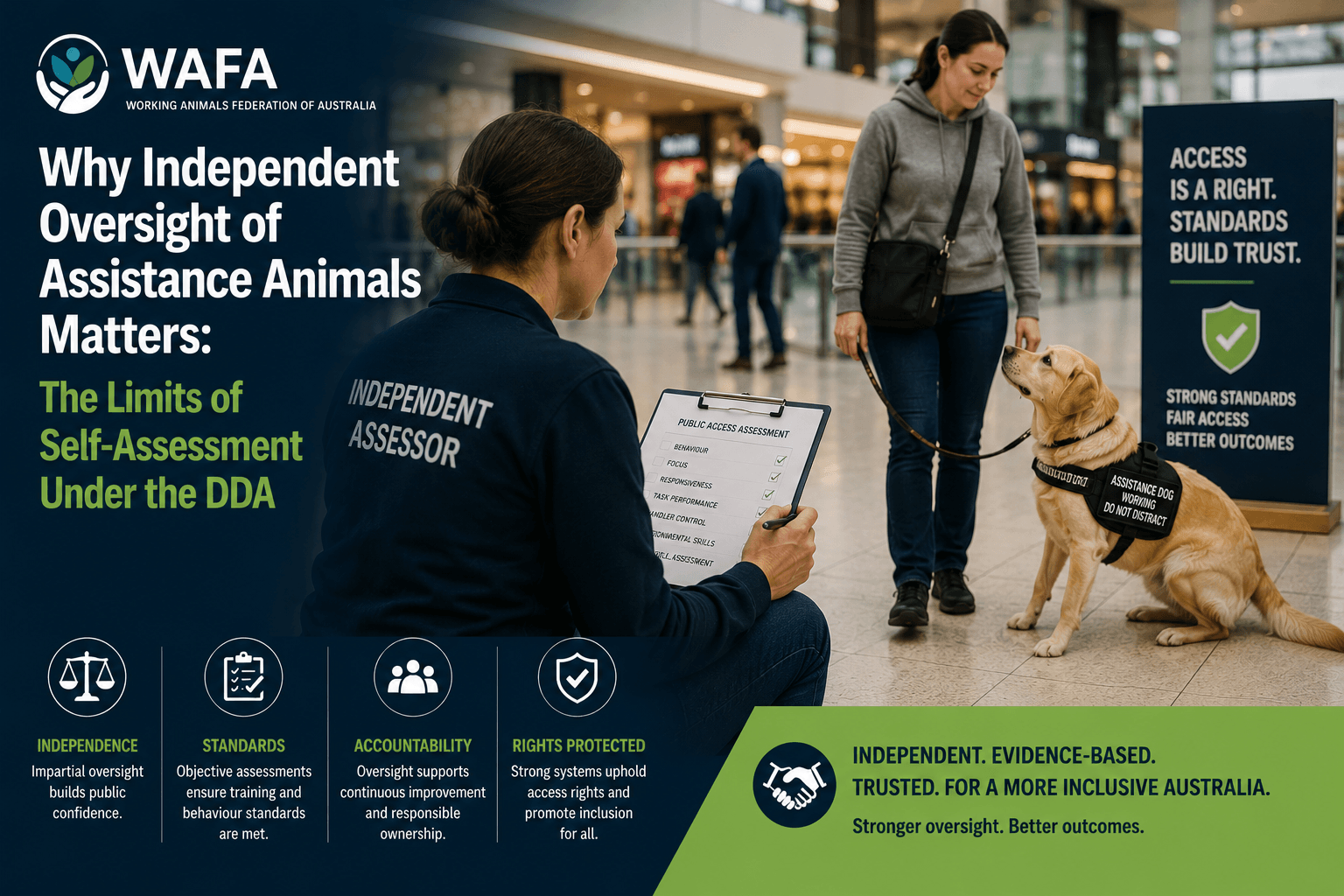
  • Independent oversight or secondary assessor review

Without this, drift away from safe practice is common and often undetected.

5. Lack of clear exit pathways built into programs

Many systems are designed with a strong focus on entry and training—but limited planning for what happens when the match is not viable.

This leads to delayed intervention, increased distress, and avoidable welfare impacts.

A well-designed system would assume that not all matches will succeed and would build structured, stigma-free exit pathways into the model from the beginning.

Real-World Case Patterns From Referrals (Pseudonymised)

The following case patterns are drawn from real referral pathways and have been grouped to illustrate systemic failure points rather than individual circumstances.

Handler readiness and unsafe training environments

In one case, a young woman with significant disability and no stable housing or support network entered into ownership of multiple dogs intended for assistance work. Training was reportedly conducted using punitive and correction-based methods, and dogs were cycled through her care over time. Despite instability, public access activities continued throughout the period each dog was present. Ultimately, multiple dogs were relinquished within short timeframes, highlighting a cycle of repeated mismatch between handler capacity, environmental stability, and assistance dog expectations.

Early acquisition and inappropriate public access exposure

In another case, a puppy was acquired at approximately eight weeks of age and presented as an assistance animal from the outset by the breeder. The dog was exposed to public access environments with limited structured training or developmental scaffolding. Over time, the dog developed fear-based aggression responses, escalating behavioural concerns, and significant risk behaviours. The case progressed to the point where the dog was considered at risk of being classified under dangerous dog provisions, illustrating the consequences of developmental and training bypass.

Physical welfare mismatch in working roles

Another referral involved a dog with significant physical impairments, including deafness, limb loss, and severe arthritis, which was still being worked in an assistance capacity. The case raised concerns regarding welfare oversight and the absence of adequate consideration of whether the animal’s physical condition was compatible with ongoing working demands.

Inappropriate veterinary clearance of unsuitable working load

In a separate case, a large-breed senior dog with advanced arthritis was signed off as suitable for assistance work. The clearance occurred without apparent understanding of the physical demands of mobility support tasks or long-term load implications. This resulted in ongoing welfare concerns and eventual withdrawal from working duties.

Lack of transparency in transfer of training history

In another situation, a dog was rehomed into an assistance role after being passed on from a previous handler. It later emerged that the dog had previously failed a Public Access Test and had been removed from a training program, information that had not been disclosed at the point of transfer. This resulted in significant gaps in behavioural history and suitability assessment at the point of intake. In addition, it was not disclosed that the dog was pregnant at the time of rehoming. This only became apparent upon arrival following interstate transport, with the dog giving birth approximately ten days later.

It subsequently emerged that the dog had continued to be worked well into late stages of pregnancy prior to transfer. This case highlights critical failures in disclosure, welfare oversight, and continuity of care during transfer between handlers and programs, as well as the risks associated with inadequate verification of working and health status prior to rehoming.

Breeding-related health exclusion risks

In a further case, a dog sourced from an unregulated breeding environment was later found to have multiple exclusionary medical conditions that were not identified at acquisition. These conditions significantly impacted suitability for sustained working roles and required reassessment of both training expectations and long-term welfare planning.

What These Cases Reveal

Across these examples, the issue is not individual failure—it is system fragmentation. Each case reflects a different point of breakdown in the broader pathway:

  • lack of readiness screening
  • absence of developmental safeguards
  • insufficient veterinary understanding of working load
  • poor transparency between organisations
  • weak sourcing and breeding oversight
  • inadequate behavioural and welfare monitoring

When viewed together, they demonstrate not isolated incidents but predictable outcomes of inconsistent system design.

Access to Information Is Still Uneven and Inconsistent

Another major issue is the lack of accessible, practical education for people considering an assistance animal.

Many individuals enter the process without a clear understanding of:

  • the full lifecycle of an assistance dog
  • training responsibilities and daily workload
  • financial and time commitments
  • public access complexity and legal expectations
  • behavioural maintenance requirements
  • likelihood of training failure or mismatch

Information is often fragmented across organisations, inconsistent in quality, or heavily promotional rather than realistic.

Greater transparency is needed, including:

  • realistic success and failure rates
  • clear explanations of training progression stages
  • case examples of mismatch and transition outcomes
  • explicit discussion of alternative supports to assistance animals

Without this, people are making life-altering decisions with incomplete information.

Just Wanting an Assistance Dog Is Not Enough

A recurring misconception is that desire or perceived need is sufficient justification for entering an assistance dog pathway.

However, suitability requires alignment across multiple domains:

  • Functional need that genuinely requires animal assistance
  • Capacity to safely handle, train, and maintain a working animal
  • Environmental stability that supports consistent training outcomes
  • Emotional readiness for long-term responsibility and unpredictability
  • Financial capacity for ongoing care and potential retraining
  • Dog temperament appropriate for sustained work demands

Not every person who wants an assistance dog will be able to safely maintain one. This is not a judgement—it is a structural reality of working animal systems.

Not Every Dog Will Reach Working Grade—and That Must Be Normalised

A critical but often misunderstood point is that not all dogs are suitable for assistance work, even with high-quality training.

Dogs may not reach working grade due to:

  • stress thresholds
  • sensory sensitivity
  • motivation variability
  • health changes over time
  • environmental reactivity
  • developmental maturity outcomes

This is not failure—it is selection integrity.

However, when systems are pressured to “make it work,” dogs may remain in unsuitable pathways for too long, increasing risk for eventual breakdown.

What a Better System Would Look Like

To meaningfully reduce breakdown rates and improve welfare outcomes, the sector requires structural reform in how assistance dog pathways are designed and governed.

A more effective system would include:

  • Mandatory multi-disciplinary intake assessment before enrolment
  • Standardised functional readiness criteria (not just medical eligibility)
  • Formal behavioural suitability testing for both dog and handler
  • Transparent education on risks, costs, and failure pathways
  • Independent oversight across training progression
  • Structured, non-punitive exit pathways built into all programs
  • More rigorous data collection on outcomes, failures, and transitions
  • Regular reassessment beyond informal annual contact

Importantly, this is not about restricting access. It is about ensuring that access is appropriate, safe, and sustainable for both parties.

Conclusion

The breakdown of assistance dog partnerships is not a rare anomaly—it is a predictable outcome of fragmented assessment systems, inconsistent oversight, and incomplete entry pathways.

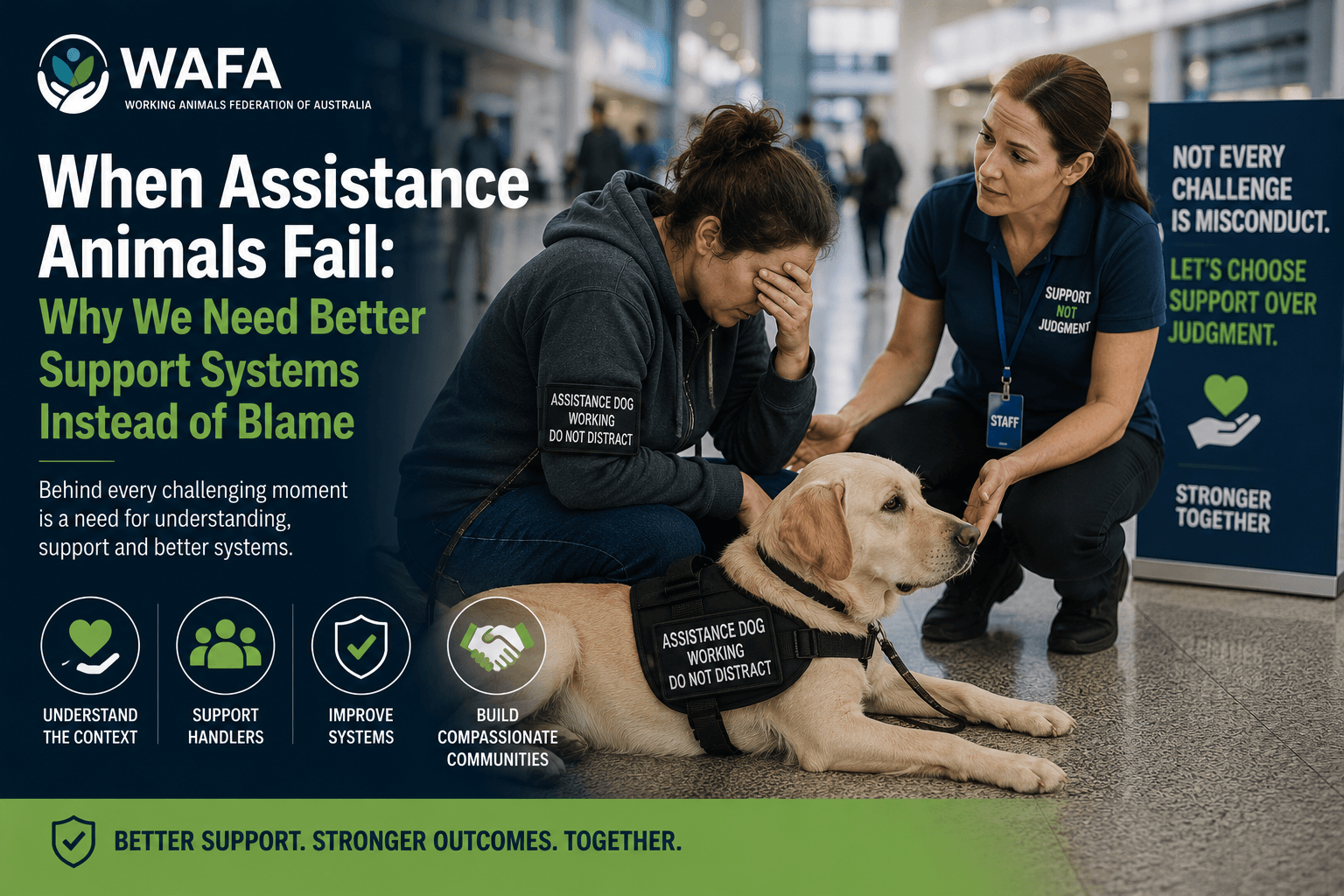
Behind every failed placement are two stories: a dog whose welfare must be protected, and a person whose support needs must still be met in other ways. Both deserve better systems than those currently in place.

The solution is not to reduce access to assistance animals, but to improve the quality, depth, and integrity of the pathways that lead to them.

Assistance dogs are highly specialised working animals. They are not interchangeable supports, and they are not suitable for every person who needs assistance. Recognising this early, transparently, and systemically is how we reduce harm—not only for dogs, but for the humans who rely on them.

Are We Born Afraid of Snakes and Mice? Understanding Fear, Learning, and Our Relationship with Misunderstood Species

Author: virtualsupportsuperstars

Author: C.L.Williams LMM MA MFPol MMPol MEnvSc MSc MBA MDisServ MAutNeu MEd

For many people, the sight of a snake, mouse, or rat can trigger an immediate reaction: a racing heart, a feeling of panic, the urge to move away, or a strong desire to avoid the animal completely.

But why?

Are humans naturally afraid of certain animals? Is fear inherited through evolution? Or are these responses learned through our families, communities, and experiences?

The answer is more complex than simply being “born afraid.”

Research suggests that human responses to animals are shaped by a combination of evolutionary influences, individual experiences, social learning, cultural beliefs, and personal interactions with animals.

Understanding where these fears come from matters because our perceptions of animals influence how we treat them — from wildlife conservation and animal welfare to whether we recognise the potential for meaningful relationships with different species.

At the Working Animals Federation of Australia (WAFA), understanding the human–animal relationship means recognising that every species has unique qualities, needs, and contributions. While dogs are often the most visible working and therapeutic animals, the human–animal bond extends far beyond one species.

The evolutionary basis of fear

One explanation for why some animals commonly trigger fear is the concept of evolutionary preparedness.

Throughout human history, certain animals represented genuine survival risks. Venomous snakes, predators, and other dangerous animals could cause injury or death. Individuals who were able to quickly detect potential threats may have had a survival advantage.

Öhman and Mineka (2001) proposed that humans may have evolved psychological mechanisms that make us particularly sensitive to detecting certain ancestral threats, including snakes and spiders.

Research has demonstrated that humans and other primates can rapidly detect snake-like stimuli compared with neutral objects, suggesting that our attention systems may be especially responsive to certain evolutionary threats.

However, evolutionary preparedness does not mean that humans are born fearing snakes.

Instead, humans may be biologically prepared to learn fear more easily toward certain stimuli.

A child is not born knowing that a snake is dangerous. Rather, their brain may be more ready to associate a snake with danger if they receive information, observe fear in others, or experience a negative interaction.

Are snake fears inherited?

Fear itself is not inherited in the same way as physical characteristics such as eye colour or height.

A person is not born with a genetic memory saying, “snakes are dangerous.”

However, genetics can influence characteristics that affect fear responses, including:

  • sensitivity to threat;
  • emotional reactivity;
  • attention toward possible danger;
  • vulnerability to anxiety.

Research suggests that biological factors influence how individuals respond to stressful situations, but specific animal fears usually develop through an interaction between biology and experience.

In simple terms:

We may inherit the ability to learn fear, but not necessarily the fear itself.

Why are some people afraid of harmless animals?

Many animals that trigger fear responses in humans are not actually dangerous.

A common example is the house mouse.

Unlike venomous snakes, mice and rats have historically posed less direct physical danger to humans. Yet many people experience strong fear, disgust, or avoidance responses toward rodents.

This demonstrates that animal fear is not always based on actual risk.

Psychologists often distinguish between:

Fear

A response linked to perceived threat or danger.

Disgust

A response associated with contamination, disease, or avoidance.

Rodents are frequently associated with ideas of dirt, disease, and infestation. These cultural associations can create powerful emotional responses, even in people who have never experienced harm from a mouse or rat.

The role of family and community learning

One of the strongest influences on animal attitudes is social learning.

Humans learn not only through direct experience but also by observing others.

Bandura’s (1977) social learning theory demonstrated that people can acquire behaviours and emotional responses by watching the reactions of others.

A child who sees an adult scream, avoid, or express disgust toward a snake or mouse may learn that the animal is something to fear.

Messages such as:

  • “Snakes are dangerous.”
  • “Rats are dirty.”
  • “Don’t touch that animal.”
  • “That animal will hurt you.”

can shape attitudes long before a person has direct experience.

Fear can therefore become part of family and community culture.

Culture shapes how we see animals

Animal perceptions vary significantly across cultures and communities.

A species feared in one society may be respected, protected, or valued in another.

For example:

  • Snakes are feared by many people but also represent healing, renewal, and protection in some cultural traditions.
  • Rats and mice are considered pests in many settings but are valued companion animals in others.
  • Wildlife education programs demonstrate that knowledge and positive experiences can change perceptions of misunderstood species.

Human relationships with animals are therefore shaped not only by biology but also by stories, experiences, traditions, and social expectations.

Beyond dogs: recognising the therapeutic potential of diverse species

When people think about animals supporting human wellbeing, dogs are often the first species that comes to mind.

Dogs have a well-established role in assistance work, therapy programs, and animal-assisted interventions. Their social behaviour, trainability, and long history living alongside humans have made them highly visible partners in supporting health and wellbeing.

However, the human–animal bond is not limited to dogs.

Research into animal-assisted interventions demonstrates that interactions with animals can support human wellbeing when programs are designed ethically and appropriately, while also prioritising the welfare of the animal involved (Fine, 2019).

The field of human–animal interaction has explored relationships between humans and many different species, including:

  • dogs;
  • horses;
  • cats;
  • rabbits;
  • guinea pigs;
  • birds;
  • fish;
  • reptiles;
  • rodents.

Each species offers different opportunities for connection and engagement.

The important question is not simply:

“What can this animal do for humans?”

It is also:

“How do we create ethical relationships where both humans and animals benefit?”

Rats and mice: challenging stereotypes

Rats and mice are among the most misunderstood animals.

Public perceptions often focus on their association with pests and disease. However, domesticated rats and mice demonstrate complex social behaviours, curiosity, learning ability, and problem-solving skills.

Research in animal cognition has demonstrated that rodents display sophisticated behaviours and social abilities, challenging outdated perceptions that they are simple or unintelligent animals (Gould & Gould, 2010).

In carefully designed educational and human–animal interaction settings, appropriately socialised rodents may provide opportunities for:

  • companionship;
  • learning;
  • confidence-building;
  • empathy development;
  • challenging negative stereotypes about animals.

While the research base for rodents in formal animal-assisted interventions is smaller than the evidence base for dogs, recognising their intelligence, individuality, and capacity for interaction helps broaden our understanding of the human–animal bond.

The value of an animal does not come only from whether society considers that species traditionally “useful.” It comes from understanding the individual animal, their welfare needs, and the type of relationship that can be ethically developed.

Snakes and other reptiles: replacing fear with understanding

Reptiles, including snakes, are another group frequently affected by fear and misunderstanding.

Because some snake species are venomous, humans have developed understandable caution around them. However, many snake species are harmless and play important ecological roles.

Safe and ethical interactions with reptiles can support:

  • environmental education;
  • confidence-building;
  • increased knowledge about wildlife;
  • reduced misconceptions;
  • greater empathy toward misunderstood animals.

Animal-assisted or educational programs involving reptiles must always prioritise welfare, including appropriate handling, environmental needs, stress management, and recognising the individual animal’s suitability for interaction.

The value of these interactions does not come from forcing contact with animals.

It comes from respectful relationships built through understanding.

The human–animal bond is about connection, not species

The therapeutic value of an animal does not come only from the species they belong to.

It comes from the relationship created between the animal and the person.

The human–animal bond is built through:

  • trust;
  • positive interaction;
  • emotional connection;
  • appropriate care;
  • respect for the animal’s needs.

A dog, horse, cat, mouse, or snake each has different abilities and welfare requirements.

Ethical practice requires recognising those differences rather than assuming all animals can or should fulfil the same roles.

The goal is not to compare species against one another.

The goal is to recognise the many ways animals and humans can form meaningful relationships.

Why this matters for animal welfare

Fear influences behaviour.

When people fear animals, they may respond through avoidance, removal, or harm. Understanding the origins of fear allows communities to develop more compassionate and evidence-based approaches.

Education plays an important role in replacing myths with knowledge.

Recognising the value of diverse species also challenges the idea that only traditional companion animals can contribute positively to human wellbeing.

Every species deserves to be understood as an individual.

Every animal deserves appropriate welfare consideration.

A note from WAFA

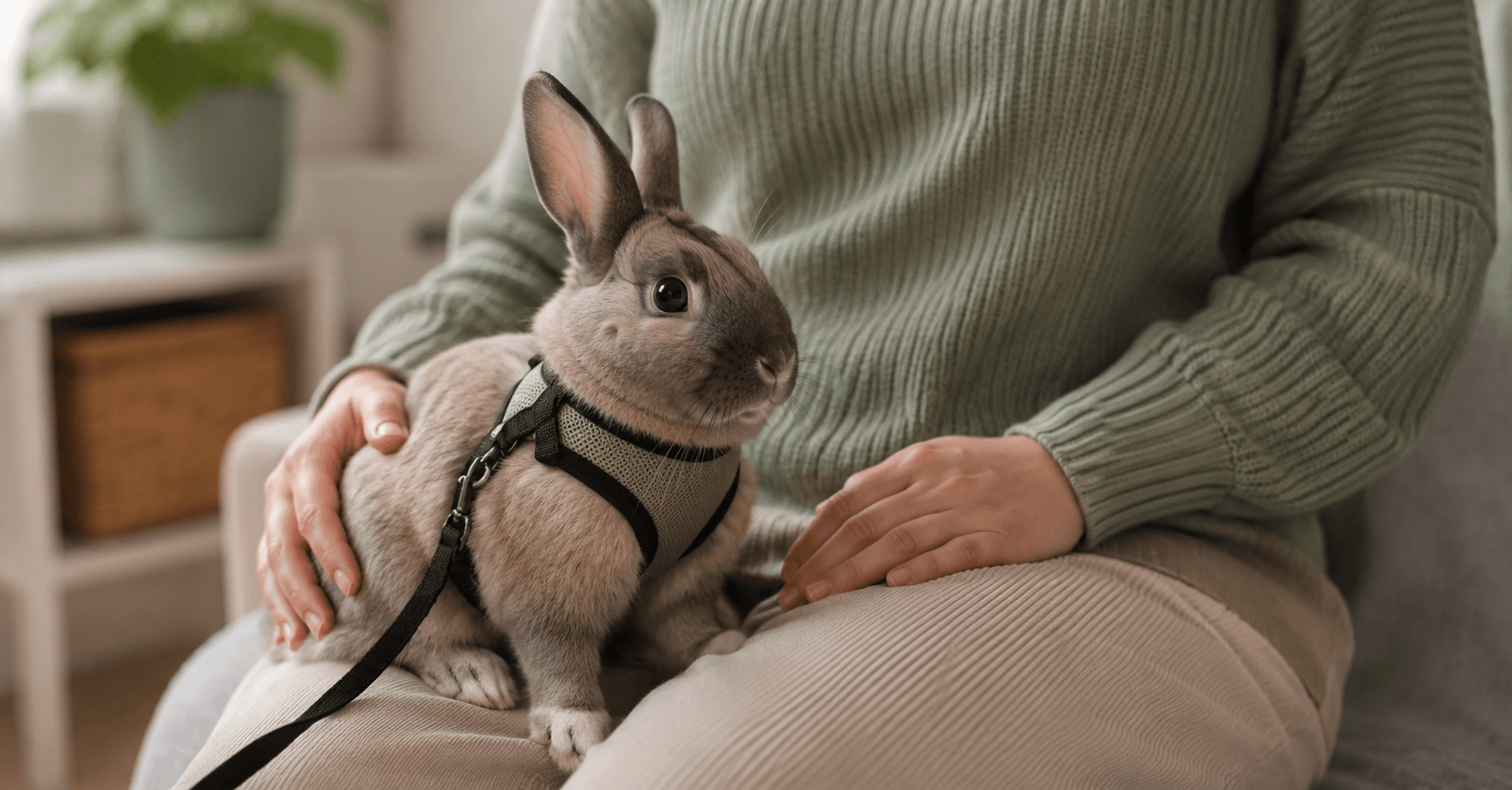
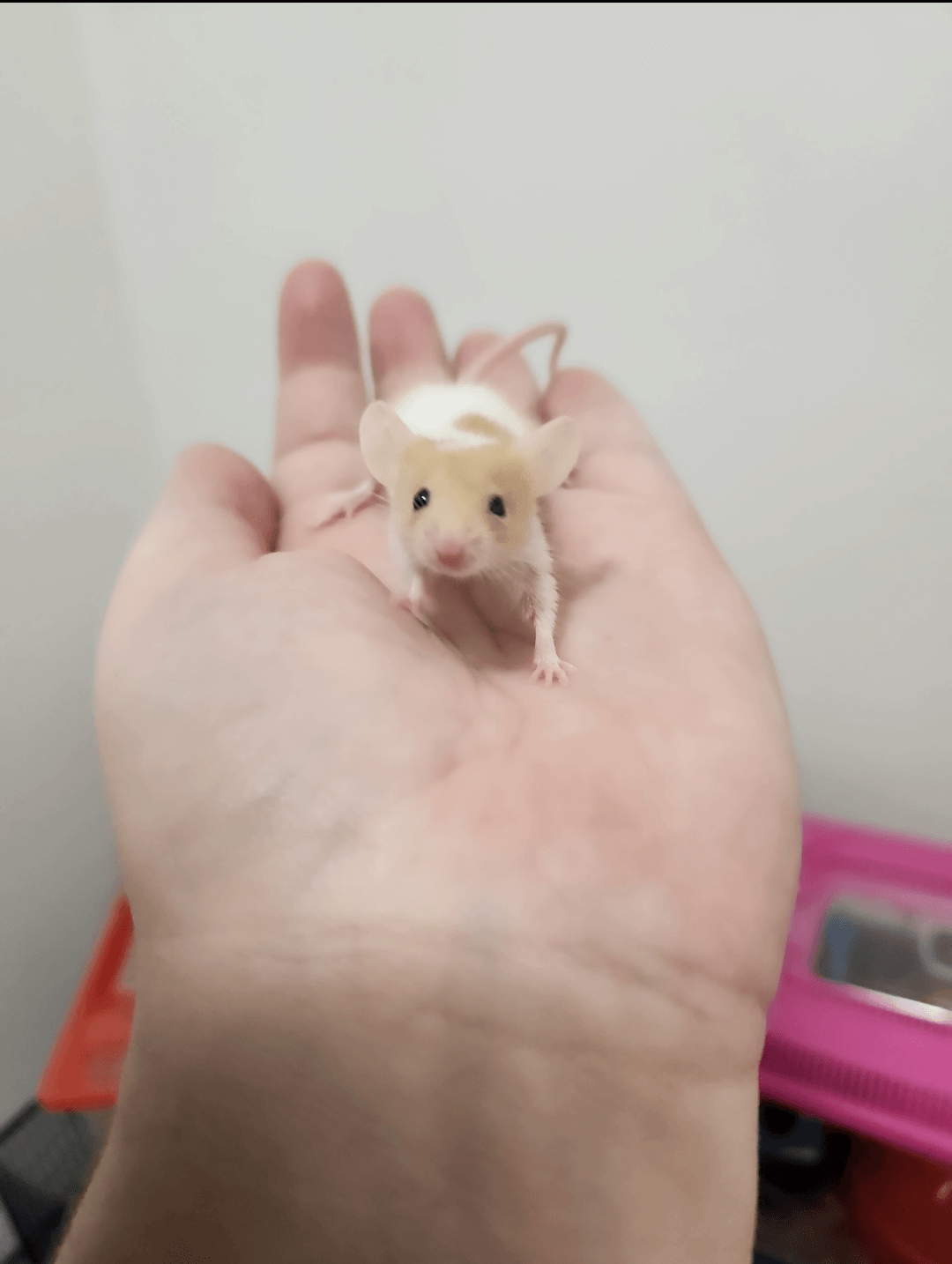
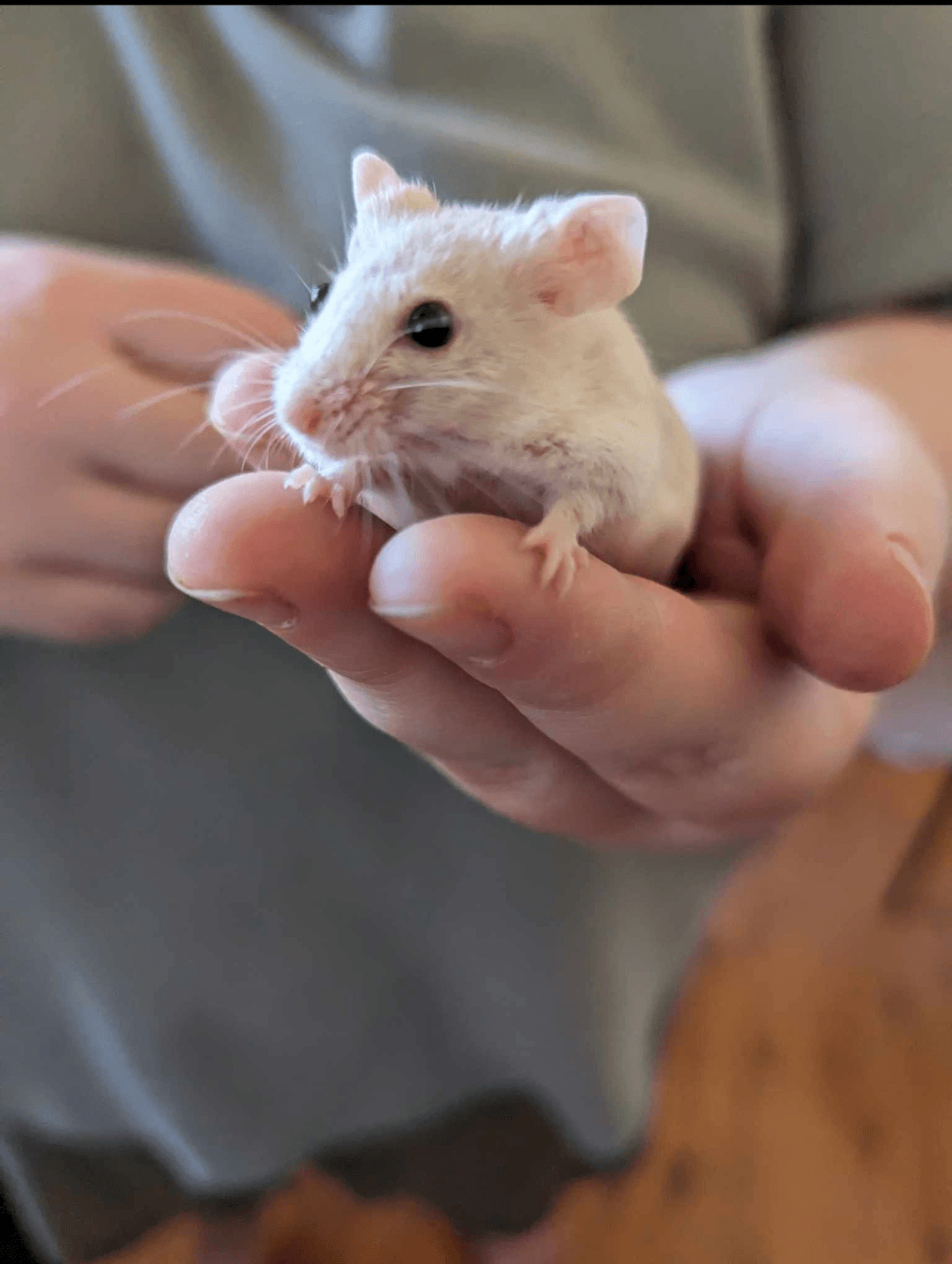
The photographs included in this article are personal images provided by the author and reflect her own journey with animals.

Interestingly, this story is also a reminder that our relationships with animals can change over time.

For many years, she was afraid of mice and rodents. Like many people, her early perceptions were shaped by common beliefs and societal messages that associated these animals with fear, dirt, or danger.

It was through working within the animal industry, learning more about their behaviour, intelligence, social nature, and individual personalities that her perspective began to change.

What was once an animal she feared became an animal she admired.

Her experience highlights an important part of the human–animal bond: understanding creates connection.

When we move beyond assumptions and take the time to learn about a species, we often discover complexity, beauty, and value where we previously saw only fear.

The journey from fear to appreciation is one many people experience, and it demonstrates the powerful role that education, experience, and compassionate interactions can play in changing the way we see animals.

Understanding fear is not about dismissing people’s experiences.

Fear is a normal human response shaped by biology and learning.

However, through education and ethical interaction, communities can move from fear and misunderstanding toward respect, coexistence, and recognition of the many ways animals can contribute to human wellbeing.

References

Bandura, A. (1977). Social learning theory. Prentice Hall.

Fine, A. H. (Ed.). (2019). Handbook on animal-assisted therapy: Foundations and guidelines for animal-assisted interventions (5th ed.). Academic Press.

Friedmann, E., & Son, H. (2009). The human–companion animal bond: How humans benefit. Veterinary Clinics of North America: Small Animal Practice, 39(2), 293–326. https://doi.org/10.1016/j.cvsm.2008.10.004

Gould, J. L., & Gould, C. G. (2010). Animal architects: Building homes for birds and mammals. Basic Books.

Herzog, H. (2010). Some we love, some we hate, some we eat: Why it’s so hard to think straight about animals. Harper.

Mineka, S., & Cook, M. (1993). Mechanisms involved in the observational conditioning of fear. Journal of Experimental Psychology: General, 122(1), 23–38.

Öhman, A., & Mineka, S. (2001). Fears, phobias, and preparedness: Toward an evolved module of fear and fear learning. Psychological Review, 108(3), 483–522. https://doi.org/10.1037/0033-295X.108.3.483

Rachman, S. (1977). The conditioning theory of fear acquisition: A critical examination. Behaviour Research and Therapy, 15(5), 375–387.

Seligman, M. E. P. (1971). Phobias and preparedness. Behavior Therapy, 2(3), 307–320.

Serpell, J. A. (2004). Factors influencing human attitudes to animals and their welfare. Animal Welfare, 13(S1), S145–S151.

Why Assistance Animals for PTSD Must Extend Beyond Military and First Responder Populations

Author: virtualsupportsuperstars

Author: National Assistance Animals Training Group (NAATG)

Post-traumatic stress disorder (PTSD) is often publicly framed through a narrow lens that centres military veterans and first responders. While these groups experience significant occupational trauma and require appropriate supports, this framing has unintentionally shaped how assistance animal services are designed, marketed, and accessed in Australia. As a result, PTSD is frequently treated as though it is primarily a workplace-related condition, rather than a broad mental health response to a wide range of traumatic experiences.

This has important consequences. It influences who is seen as an “appropriate” candidate for an assistance animal, who is referred into programs, and which populations are actively included in service design. In practice, this means that survivors of domestic and family violence (DFV) and sexual assault are frequently underrepresented in assistance animal pathways, despite having high rates of trauma-related mental health need.

PTSD as a Broad Trauma Response, Not an Occupational Condition

Clinically, PTSD is not defined by how trauma is acquired, but by exposure to actual or threatened death, serious injury, or sexual violence, alongside subsequent psychological and physiological responses (American Psychiatric Association, 2013). This definition makes no distinction between occupational and non-occupational trauma. The condition can arise following military combat, but also following childhood abuse, sexual assault, domestic violence, serious accidents, medical trauma, or coercive and controlling relationships.

In Australia, PTSD affects a substantial proportion of the population. The Australian Institute of Health and Welfare (AIHW) reports that approximately 4–5% of Australians experience PTSD in any given year, with higher lifetime prevalence when subthreshold trauma responses and comorbid conditions are considered (AIHW, 2022). Importantly, interpersonal trauma—particularly sexual violence and domestic abuse—is strongly associated with chronic PTSD presentations and complex trauma profiles (AIHW, 2023).

Despite this, assistance animal program structures have not evolved in a way that reflects the diversity of PTSD presentations in the community.

The Underrepresentation of Domestic Violence and Sexual Assault Survivors

Domestic and family violence remains a widespread issue in Australia. The Australian Bureau of Statistics (2023) reports that approximately one in four women have experienced emotional abuse by a partner since the age of 15, and around one in six have experienced physical or sexual violence by a partner. Additionally, significant proportions of women report experiencing sexual violence or childhood sexual abuse, with long-term psychological impacts frequently persisting well beyond the period of abuse.

These experiences are strongly associated with PTSD, anxiety disorders, and long-term functional impairment (AIHW, 2023). However, despite this high level of need, survivors of DFV and sexual assault are significantly less likely to be explicitly targeted or supported within assistance animal programs compared to veterans and first responders.

In practice, assistance animal pathways in Australia have historically developed through veteran rehabilitation frameworks, emergency service wellbeing initiatives, and occupational trauma models. While these programs provide essential support to their target cohorts, they have also inadvertently established a dominant narrative that PTSD is primarily a consequence of service-related trauma. This has led to a service landscape where eligibility criteria, referral pathways, and organisational branding often implicitly prioritise occupational trauma over interpersonal trauma.

Why This Gap Exists in Service Design

The underrepresentation of DFV and sexual assault survivors in assistance animal programs is not the result of clinical unsuitability. Rather, it reflects structural and systemic factors within the disability and assistance animal sectors.

Firstly, service design bias plays a significant role. Many assistance animal organisations in Australia originated from veteran-focused programs, and their operational frameworks were developed around military and emergency service cohorts. These frameworks have been expanded over time but not fundamentally redesigned, resulting in eligibility models that still implicitly reflect their original target populations.

Secondly, referral pathways contribute to inequity. Survivors of DFV and sexual assault are more likely to engage with crisis accommodation services, legal systems, or trauma counselling services rather than veteran health networks. These systems do not consistently include assistance animals as a recognised therapeutic or functional support option, which limits awareness and referral rates.

Thirdly, there is a persistent cultural narrative that positions PTSD as a condition primarily associated with combat or frontline service. This narrative is reinforced by media representation and public discourse, which influences both funding priorities and organisational focus within the assistance animal sector.

Finally, complexity in DFV-related trauma cases, including ongoing safety planning and legal proceedings, is sometimes misinterpreted as a barrier to assistance animal placement. While these factors require careful clinical and ethical consideration, they do not negate the potential benefits of appropriately trained assistance animals in supporting emotional regulation, grounding, and functional independence.

Assistance Animals and Trauma Recovery Beyond Occupational PTSD

Assistance animals are increasingly recognised as providing functional benefits for individuals with PTSD, including support for emotional regulation, interruption of dissociative episodes, reduction of hypervigilance, and facilitation of community access. While they are not a first-line clinical treatment, they can form part of a broader psychosocial support framework for individuals with trauma-related disability.

For survivors of domestic and family violence and sexual assault, these functions are particularly relevant. Interpersonal trauma often results in heightened threat perception in everyday environments, difficulty feeling safe in public spaces, sleep disturbance, and ongoing physiological stress responses. Assistance animals may provide grounding through tactile stimulation, predictable behavioural routines, and environmental scanning behaviours that help reduce perceived threat levels.

Importantly, the therapeutic value of assistance animals in these contexts is not dependent on the origin of trauma. Rather, it is related to the functional impact of PTSD symptoms on daily living.

Emerging Change in the Sector

While historically limited, there is a gradual shift occurring within parts of the Australian assistance animal sector toward more inclusive, trauma-informed service design. Some organisations are beginning to explicitly recognise that PTSD arising from domestic and family violence and sexual assault should be treated as a primary eligibility pathway rather than a secondary or incidental category.

For example, the National Assistance Animals Training Group has developed a focus on supporting individuals affected by interpersonal trauma, including women impacted by DFV and sexual violence, as part of a broader effort to expand access beyond traditional veteran and first responder cohorts. This represents an important structural shift in how assistance animal services conceptualise PTSD and eligibility.

This emerging approach aligns more closely with epidemiological evidence demonstrating that PTSD is not confined to occupational exposure but is strongly associated with interpersonal violence and childhood trauma (AIHW, 2023; Australian Bureau of Statistics, 2023).

Why This Needs to Change

The current imbalance in assistance animal provision raises several systemic concerns. First, it contributes to inequitable access to disability supports for a large population of trauma survivors who meet clinical criteria for PTSD but are not routinely included in service pathways. Second, it reinforces a hierarchy of trauma in which certain experiences are socially validated while others are rendered less visible. Third, it limits the development of evidence-informed, trauma-diverse assistance animal practices that reflect the full scope of need in the community.

From a policy and human rights perspective, this is significant. Australia’s mental health and family violence frameworks increasingly recognise DFV and sexual assault as major public health issues. However, this recognition is not consistently translated into disability support systems such as assistance animal training and accreditation pathways.

Addressing this gap requires a shift from occupation-based eligibility models toward trauma-informed frameworks that prioritise functional impairment and lived experience rather than the source of trauma. It also requires improved cross-sector referral pathways, increased professional education, and clearer recognition of assistance animals as a legitimate support option for survivors of interpersonal violence.

Conclusion

PTSD is a complex and heterogeneous condition that arises from a wide range of traumatic experiences. While military veterans and first responders represent an important and visible cohort, they do not represent the full population of people living with trauma-related disability.

Survivors of domestic and family violence and sexual assault experience some of the highest rates of PTSD in the community, yet remain underrepresented in assistance animal pathways. This reflects structural design limitations rather than clinical unsuitability.

As the assistance animal sector continues to evolve, there is a clear need to broaden eligibility frameworks and service design to reflect the true epidemiology of trauma in Australia. Doing so would not diminish support for veterans and first responders, but instead ensure that assistance animal programs are grounded in clinical reality, equity, and inclusion.

References

American Psychiatric Association. (2013). Diagnostic and statistical manual of mental disorders (5th ed.). https://doi.org/10.1176/appi.books.9780890425596

Australian Bureau of Statistics. (2023). Personal safety, Australia. https://www.abs.gov.au/statistics/people/crime-and-justice/personal-safety-australia/latest-release

Australian Institute of Health and Welfare. (2022). Mental health services in Australia. https://www.aihw.gov.au/reports/mental-health-services/mental-health-services-in-australia

Australian Institute of Health and Welfare. (2023). Family, domestic and sexual violence. https://www.aihw.gov.au/reports/domestic-violence/family-domestic-sexual-violence

Open Arms – Veterans & Families Counselling. (n.d.). Post-traumatic stress disorder (PTSD). https://www.openarms.gov.au/health-professionals/assessment-and-treatment/treating-ptsd

The Human–Animal Bond: Why an Ecosystem of Care Model Matters for Assistance Animals

Author: virtualsupportsuperstars

Author: C. L. Williams LLM, MA, MFPol, MMPol, MEnvSc, MSc, MBA, MDisServ, MAutNeu, MEd

For thousands of years, humans and animals have shared a unique relationship built on trust, companionship, cooperation, and mutual benefit. This relationship — known as the human–animal bond — recognises that animals are not simply tools or services, but sentient beings who contribute meaningfully to human wellbeing, while humans have an ethical responsibility to protect and support the animals in their care.

For assistance animals, this bond is at the centre of everything they do. Whether supporting a person with disability, assisting with medical needs, detecting changes in health conditions, providing emotional regulation, or increasing independence and community participation, assistance animals are part of a complex relationship between the animal, the handler, professionals, organisations, and the wider community.

This is why the Ecosystem of Care Model is so relevant to the work of the Working Animals Federation of Australia (WAFA).

Moving Beyond the “Animal as a Tool” Approach

Historically, assistance animals have sometimes been viewed primarily through a functional lens: what tasks can the animal perform, and how effectively can it perform them?

While task training and reliability are essential, this approach can overlook the most important component of the partnership — the relationship between the human and the animal.

An assistance animal is not a piece of equipment. They are a living partner with their own needs, emotions, personality, welfare requirements, and capacity. The success of an assistance animal partnership depends not only on training outcomes, but also on:

  • the quality of the human–animal relationship;
  • the animal’s physical and emotional wellbeing;
  • appropriate matching between the animal and person;
  • ongoing support and education;
  • ethical standards throughout the animal’s working life.

The Ecosystem of Care Model recognises that supporting an assistance animal means supporting the entire system surrounding that partnership.

What Is the Ecosystem of Care Model?

The Ecosystem of Care Model views wellbeing as something created through interconnected relationships rather than through one individual or service.

Within assistance animal programs, this ecosystem may include:

The Animal

  • welfare, health, enrichment, rest, retirement planning, and choice;
  • positive reinforcement-based training;
  • recognition of the animal as a sentient being.

The Handler

  • education about animal behaviour and welfare;
  • understanding their responsibilities as a partner and caregiver;
  • support to maintain a safe and successful working relationship.

Professionals

  • trainers, behaviour consultants, veterinarians, occupational therapists, psychologists, educators, and healthcare providers working collaboratively.

Organisations

  • ethical standards, assessment processes, accreditation, complaints pathways, and accountability systems.

The Community

  • public understanding of assistance animals;
  • respectful access and inclusion;
  • reducing discrimination and misinformation.

A strong assistance animal system depends on every part of this ecosystem functioning together.

Why This Matters for WAFA

As Australia’s independent peak body for assistance, therapy, detection, and education animals, WAFA’s role extends beyond simply recognising trained animals. WAFA promotes a welfare-centred approach where both humans and animals are supported.

The Ecosystem of Care Model aligns directly with WAFA’s commitment to:

1. Animal Welfare First

The human–animal bond can only thrive when the animal’s welfare is protected. Assistance animals provide incredible support, but they should never be expected to work at the expense of their physical or emotional wellbeing.

Ethical assistance animal practice requires consideration of:

  • appropriate workload;
  • stress and fatigue;
  • behavioural wellbeing;
  • veterinary care;
  • enrichment and downtime;
  • retirement and transition planning.

A truly successful assistance animal is not only effective — they are happy, healthy, and respected.

2. Evidence-Based and Ethical Practice

The growing understanding of the human–animal bond highlights the importance of evidence-based approaches. Assistance animals should be supported through practices that consider animal behaviour science, disability inclusion principles, and welfare research.

WAFA’s standards, education programs, accreditation pathways, and professional expectations aim to strengthen quality and consistency across Australia.

3. Supporting Sustainable Partnerships

The relationship between an assistance animal and their handler changes over time. A newly placed team may require intensive support, while an established partnership may need ongoing education, reassessment, or adjustments as circumstances change.

The Ecosystem of Care Model recognises that support does not end when an animal is placed. Sustainable partnerships require lifelong commitment.

4. Creating a More Inclusive Community

Assistance animals do not operate in isolation. Their success is influenced by workplaces, schools, healthcare settings, businesses, transport providers, and the broader community.

Education is essential to ensure that assistance animal teams are recognised, respected, and included.

The Future of Assistance Animals in Australia

The future of assistance animals requires a shift from viewing animals as individual solutions to recognising them as part of a broader ecosystem of care.

The human–animal bond reminds us that assistance animals are partners. The Ecosystem of Care Model reminds us that these partnerships require support from an entire network of people, professionals, organisations, and communities.

At WAFA, this approach underpins our vision: improving outcomes for people through ethical, transparent, and welfare-focused assistance animal practices while ensuring the animals who provide this support receive the care, respect, and protection they deserve.

Because a truly successful assistance animal partnership is not just about what an animal can do for a person — it is about the relationship, trust, and shared wellbeing created between them.

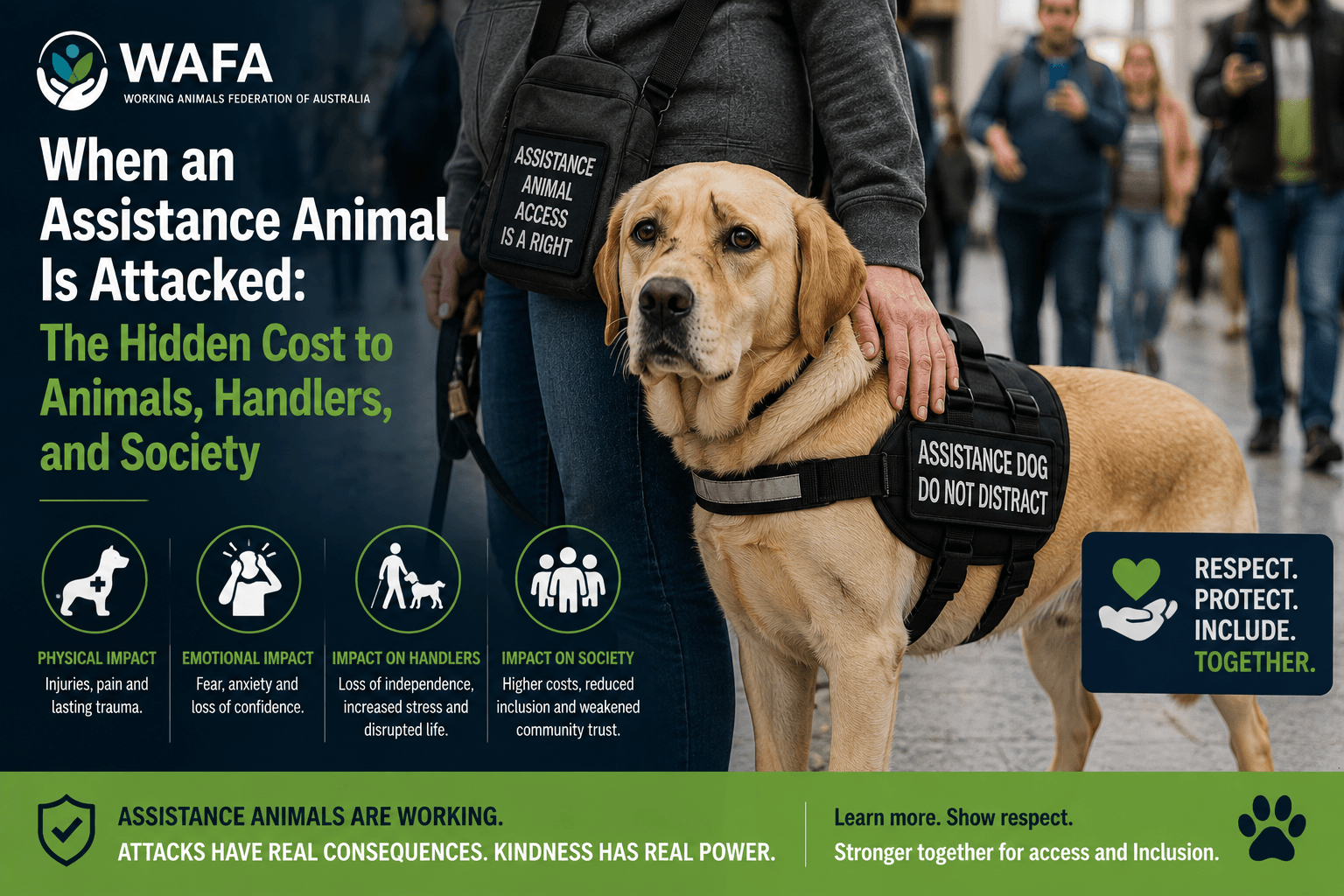
When an Assistance Animal Is Attacked: The Hidden Cost to Animals, Handlers, and Society

Author: virtualsupportsuperstars

Author: C.L. Williams LLM MA MFPol MMPol MEnvSc MSc MBA MDisServ MAutNeu Med MMH

Assistance animals provide independence, safety, confidence, and participation in daily life for thousands of Australians living with disability. They are not simply pets accompanying their handlers into public spaces. They are highly trained working animals that perform disability-related tasks and enable their handlers to access education, employment, healthcare, transport, and community life.

For many handlers, an assistance animal is the difference between isolation and participation, dependence and independence, or safety and risk.

Yet despite their importance, assistance animals are increasingly exposed to risks in public spaces, including attacks by other animals and deliberate interference by members of the public.

While people often focus on the physical injuries suffered by the animal, the consequences frequently extend far beyond veterinary treatment. The impacts can be profound, long-lasting, and life-changing for both the animal and the person who relies upon them.

A Personal Experience

Several years ago, my own assistance dog was attacked while working.

She was in a down-stay between my legs, back to the door inside an elevator. She was under control, performing exactly as she had been trained to do, and presenting no risk to anyone.

When the elevator doors opened, another assistance dog, affiliated with one of Australia’s largest accrediting organisations, immediately lunged across the elevator and grabbed her around the neck, shaking her back and forth.

The attack was severe.

My dog sustained substantial injuries and required extensive emergency veterinary treatment, including almost 100 stitches, and totalling close to $10K.

The physical recovery process was lengthy and challenging. Fortunately, after rehabilitation and recovery, she was ultimately able to return to work.

Not every assistance animal is so fortunate.

Many assistance animals that experience serious attacks are permanently retired due to physical injuries, psychological trauma, behavioural changes, or a loss of confidence while working.

For some handlers, this means losing years of training, thousands of hours of work, significant financial investment, and an essential disability support.

More Than a Veterinary Bill

When an assistance animal is injured or retired, the consequences extend far beyond veterinary expenses.

Assistance animals require careful selection, socialisation, training, public access preparation, task training, assessment, and ongoing maintenance throughout their working lives.

Depending on the pathway, developing a reliable assistance animal may take many years.

The costs associated with a serious attack may include:

  • Emergency veterinary treatment.
  • Specialist surgery.
  • Rehabilitation and physiotherapy.
  • Behavioural assessment and rehabilitation.
  • Time away from work or education.
  • Reassessment and retraining.
  • The potential need to source and train a replacement animal.

For owner-trained teams, the loss may represent thousands of hours of unpaid effort and dedication.

For program-trained teams, replacement costs can easily reach tens of thousands of dollars.

In many cases, there is no immediate replacement available.

A retired assistance animal cannot simply be replaced in the same way as damaged equipment.

The Human Impact

The impact on handlers is often overlooked.

For many people with disability, an assistance animal is not merely a support tool. The animal may be integral to their ability to safely navigate the world, manage symptoms, communicate, regulate emotions, respond to medical conditions, or participate in community life.

When an assistance animal is attacked, handlers may experience:

  • Increased anxiety in public spaces.
  • Reduced confidence travelling independently.
  • Fear of future attacks.
  • Reduced participation in employment or education.
  • Social isolation.
  • Increased reliance on carers or support workers.
  • Exacerbation of existing disabilities.

In my own case, the attack significantly exacerbated my PTSD and I developed agoraphobia.

Watching a trusted assistance animal suffer serious injuries while simply performing her role was profoundly distressing. Long after the physical wounds healed, the psychological impacts remained.

Many handlers who experience similar incidents report becoming hypervigilant whenever unfamiliar dogs are nearby, particularly in confined spaces such as lifts, public transport, shopping centres, hospitals, and medical facilities.

The emotional consequences can continue for years.

Understanding Different Types of Interference

It is important to distinguish between different forms of interference involving assistance animals.

Many handlers regularly experience members of the public approaching their assistance animals, talking to them, attempting to pat them, offering food, calling their names, or allowing pet dogs to approach.

These behaviours are often driven by curiosity, misunderstanding, or a lack of awareness. While they can be frustrating, disruptive, and potentially dangerous, they are not necessarily malicious.

Public education is essential to reduce these incidents.

However, there is a separate and far more serious issue that receives much less attention.

That issue is deliberate or reckless interference that causes actual harm to a working assistance animal team.

This includes situations where individuals knowingly place a working assistance animal or its handler at risk, deliberately provoke reactions, intentionally distract the animal in dangerous environments, use another animal to threaten or attack the assistance animal, or otherwise engage in conduct likely to cause injury, trauma, or retirement.

This is not simply a matter of public misunderstanding.

It is malicious or reckless interference with a disability support and a living, sentient animal.

The consequences can be lifelong.

Assistance Animals Are Living Assistive Technology

Most people would immediately recognise the seriousness of deliberately damaging a wheelchair, mobility scooter, walker, hearing aid, communication device, prosthetic limb, or white cane.

Such conduct is not viewed as a harmless prank.

It is recognised as behaviour that directly affects a person’s independence, safety, and ability to participate in society.

Assistance animals perform the same functional role.

However, assistance animals differ from other forms of assistive technology because they are living beings.

They can experience pain.

They can experience fear.

They can develop trauma.

They can lose confidence.

They can become unable to perform the work for which they were trained.

When an assistance animal is harmed, there are effectively two victims.

The animal suffers the physical and psychological consequences of the incident.

The handler suffers the loss or impairment of a critical disability support.

Why Stronger Legal Protections Are Needed

Animal welfare legislation provides important protections against cruelty, neglect, and abuse.

However, there is a compelling argument that stronger legal protections should exist where assistance animals are deliberately harmed or interfered with while performing disability-related work.

The consequences extend beyond animal welfare concerns.

An attack on a working assistance animal may effectively remove a person’s ability to access education, employment, healthcare, transport, housing, or community life.

In practical terms, the impacts may resemble those that would occur if somebody deliberately destroyed a wheelchair or other essential assistive technology.

Indeed, because assistance animals are living beings, the consequences may be even more significant.

Legislators should consider whether specific offences or enhanced penalties should apply where a person:

  • Deliberately attacks or injures a working assistance animal.
  • Uses another animal to threaten, harass, or attack a working assistance animal.
  • Intentionally interferes with a working assistance animal in a manner likely to cause harm.
  • Causes an assistance animal to be retired through reckless or deliberate conduct.
  • Engages in behaviour that compromises the safety or effectiveness of a disability support animal.

Such conduct should be recognised not merely as harm to an animal, but as interference with disability supports, independence, participation, and human rights.

Greater Public Awareness Is Essential

While stronger laws are important, legislation alone cannot prevent every incident.

Greater public awareness is equally important.

Many Australians have never been taught:

  • What assistance animals do.
  • Why they should not be distracted.
  • Why pet dogs should not approach working assistance animals.
  • The extensive training involved.
  • The financial investment involved.
  • The consequences that can arise when something goes wrong.

Most people would never intentionally place an assistance animal at risk.

However, many people underestimate the seriousness of interference because they do not understand what is at stake.

An assistance animal is not simply a dog wearing a vest.

It may represent years of training, tens of thousands of dollars of investment, and a critical component of a person’s ability to function independently.

Public awareness campaigns should focus not only on appropriate behaviour around assistance animals but also on the broader consequences of interference.

People need to understand that their actions can affect both animal welfare and disability rights.

Protecting Assistance Animals Means Protecting Human Rights

At its core, this issue is about far more than dogs.

It is about the rights of people with disability to live independently, participate in society, access services, engage in employment and education, and move through public spaces safely.

When an assistance animal is attacked, injured, traumatised, or forced into retirement, the effects ripple far beyond the immediate incident.

The animal suffers.

The handler suffers.

Families suffer.

Communities lose participation and inclusion.

Support systems face increased demands.

Many of these incidents are entirely preventable.

Greater public awareness, stronger accountability, better understanding of assistance animal teams, and more robust legal protections can help reduce these risks.

Every assistance animal represents an extraordinary partnership between a person and an animal working together to overcome barriers.

That partnership deserves protection.

When malicious or reckless interference causes harm to an assistance animal, it is not merely an attack on a dog. It is an attack on a disability support, a working partnership, and the independence and wellbeing of the person who relies upon it every day.

This version reads as a complete WAFA-style policy and advocacy blog, combining personal experience, animal welfare, disability rights, legal reform, and public education into a single cohesive article.

When a Magician Can Have a Rabbit but a Person With Disability Cannot: Rethinking Queensland’s Approach to Assistance Rabbits

Author: virtualsupportsuperstars

By: CL Williams LLM MA MFPol MMPol MEnvSc MSc MBA MDisServ MAutNeu MEd MMH

Queensland has some of the strictest rabbit regulations in Australia, and there are important reasons for this approach.

The European rabbit (Oryctolagus cuniculus) is recognised as a significant invasive species that has caused substantial environmental and agricultural damage across Australia. Rabbits contribute to land degradation, compete with native species, damage vegetation, and create ongoing challenges for conservation and agricultural management (Queensland Government Department of Agriculture and Fisheries, n.d.).

Protecting Australia’s unique environment from invasive species is a legitimate and necessary responsibility.

However, effective regulation requires more than identifying a species as a potential risk. Good regulatory systems consider context, purpose, containment, management practices, and the individual circumstances of each situation.

Currently, Queensland legislation provides limited pathways for rabbits to be kept for approved purposes, including certain regulated exhibition and entertainment activities. However, there is no equivalent pathway specifically recognising an assistance rabbit supporting a person with disability.

This creates a significant policy gap.

A person may potentially obtain approval for a rabbit used in a regulated entertainment context, such as a magic act, yet a person with disability may have no pathway to bring their trained assistance rabbit into Queensland to support their daily life.

This raises an important question:

Why does the regulatory system recognise some controlled uses of rabbits, but not a pathway for a carefully assessed assistance animal supporting a person with disability?

Assistance animals are not ordinary companion animals

WAFA supports strong biosecurity protections and recognises the importance of preventing environmental harm.

However, regulation should distinguish between different circumstances.

An unmanaged rabbit population presents a different risk profile from an appropriately managed assistance animal.

Assistance animals operate within a framework of:

  • individual suitability assessment;
  • behavioural evaluation;
  • health management;
  • responsible ownership;
  • training and ongoing support;
  • welfare monitoring.

International animal-assisted intervention guidelines emphasise that responsible animal involvement requires consideration of animal welfare, suitability, training, and appropriate management practices (International Association of Human-Animal Interaction Organizations [IAHAIO], 2018).

The relevant question should not simply be:

“What species is this animal?”

The question should be:

“What is the individual animal’s role, training, management, and level of risk?”

Australian disability law focuses on function, not species

The Disability Discrimination Act 1992 (Cth) provides the primary legal framework for assistance animals in Australia.

Section 9(2) defines an assistance animal based on its purpose and function:

an animal trained to assist a person with disability to alleviate the effect of the person’s disability.

The legislation focuses on what the animal does for the person rather than restricting recognition to a particular species (Australian Government, 1992).

Dogs remain the most common assistance animal species due to their long history of domestication, trainability, and suitability for many working roles.

However, Australian disability legislation does not define assistance animals solely as dogs.

This distinction is important.

Where an animal has been appropriately assessed, trained, and managed as a disability support, policy decisions should consider the individual circumstances rather than relying solely on assumptions about species.

Human–animal relationships and disability support

A growing body of research demonstrates that human–animal interactions can contribute to wellbeing, emotional regulation, social connection, and stress reduction when appropriately implemented (Beetz et al., 2012).

The broader animal-assisted intervention literature recognises that successful outcomes depend on several factors, including:

  • appropriate matching between the person and animal;
  • realistic expectations;
  • preparation and training;
  • ongoing support;
  • protection of animal welfare (Fine, 2019; Nimer & Lundahl, 2007).

This evidence does not suggest that every animal of every species is suitable for every assistance role.

Rather, it demonstrates that suitability is determined through assessment, preparation, and responsible management.

The focus should therefore be on evidence-based evaluation of individual animals and their circumstances.

The importance of recognising non-canine assistance animals

While dogs are the predominant assistance animal species, people with disability may form meaningful and beneficial partnerships with other appropriately selected animals.

Different animals may provide different forms of support depending on:

  • the person’s disability-related needs;
  • their environment;
  • the animal’s temperament;
  • the tasks required;
  • welfare considerations.

A one-size-fits-all approach risks excluding people whose disability support needs are met through appropriately trained non-canine animals.

The question should not be whether a particular species is common.

The question should be whether the animal can safely and ethically fulfil its role while meeting appropriate welfare and regulatory standards.

A risk-based approach is possible

Queensland already demonstrates that rabbits can be managed under controlled circumstances through permit and regulatory systems.

Rather than creating a blanket exclusion, a specific pathway for assistance rabbits could apply appropriate safeguards.

A potential framework could include:

  • evidence of genuine assistance animal status;
  • assessment by an appropriately qualified professional;
  • veterinary health certification;
  • identification and registration requirements;
  • desexing requirements where appropriate;
  • secure containment standards;
  • prohibition on breeding;
  • ongoing owner responsibility.

Such a framework would not remove biosecurity protections.

It would apply them proportionately.

Risk-based regulation is not the absence of regulation.

It is regulation that recognises different levels of risk.

The impact on people with disability

The absence of a pathway for assistance rabbits can create significant barriers for people with disability.

A person may be required to:

  • avoid travelling to Queensland;
  • separate from their assistance animal;
  • lose access to a support that contributes to independence and participation;
  • navigate complex regulatory barriers without a clear process.

For many people with disability, an assistance animal is not simply a companion.

It may be an important support that assists with daily functioning, confidence, emotional regulation, routine, and community access.

Disability inclusion requires governments to consider how legislation affects people in real-world situations.

Could Commonwealth disability law override Queensland restrictions?

An important legal question is whether Commonwealth disability discrimination protections could apply where a Queensland law prevents a person from bringing an assistance animal into the state.

Under section 109 of the Australian Constitution, where a valid Commonwealth law and a state law are inconsistent, the Commonwealth law prevails to the extent of the inconsistency. This principle is known as Commonwealth “paramountcy” or inconsistency of laws.

The Disability Discrimination Act 1992 (Cth) is a Commonwealth law that provides protections against discrimination on the basis of disability, including protections relating to assistance animals (Australian Government, 1992).

However, whether section 109 would apply in the context of an assistance rabbit would ultimately be a matter for judicial determination. A court would need to consider complex questions, including whether Queensland’s biosecurity legislation is inconsistent with Commonwealth disability discrimination protections, whether the state law creates unlawful discrimination, and whether any exemptions or legitimate public interest considerations apply.

The existence of a Commonwealth disability law does not automatically invalidate a state law. A person or organisation would generally need to challenge the issue through appropriate legal proceedings and ask a court to determine whether an inconsistency exists.

In practice, accessing such a legal pathway can be extremely difficult for many people with disability. Court proceedings can involve significant financial costs, lengthy timeframes, complex legal processes, and substantial emotional demands.

This creates a broader policy question: should individuals with disability be required to undertake expensive litigation simply to determine whether they can access a support that may be essential to their independence?

WAFA believes that proactive policy development is preferable to leaving these issues unresolved until they reach the courts. Clear, transparent, and evidence-based regulatory pathways would provide certainty for people with disability, regulators, and the community while avoiding unnecessary legal disputes.

Environmental protection and disability inclusion can coexist

WAFA recognises that invasive species management is essential.

Australia’s experience with introduced species demonstrates the importance of strong biosecurity systems.

However, environmental protection and disability inclusion are not competing goals.

A modern regulatory system can protect the environment while also recognising carefully managed assistance animals.

The issue is not whether rabbits require regulation.

They do.

The issue is whether every rabbit presents the same level of risk regardless of:

  • purpose;
  • training;
  • containment;
  • ownership responsibilities;
  • regulatory oversight.

A call for evidence-based reform

WAFA calls for Queensland to consider developing a transparent, evidence-based pathway for genuine assistance rabbits and other non-canine assistance animals.

Any future framework should involve consultation with:

  • people with disability;
  • assistance animal organisations;
  • animal behaviour professionals;
  • veterinarians;
  • biosecurity experts;
  • environmental stakeholders.

Good policy protects both people and animals.

It recognises legitimate environmental concerns while ensuring disability supports are not excluded without consideration of individual circumstances.

Because when a regulatory system can recognise a rabbit assisting in entertainment but cannot provide a pathway for a rabbit assisting a person with disability, it is time to ask whether the balance between risk management and inclusion is being achieved.

References

Australian Government. (1992). Disability Discrimination Act 1992 (Cth). Federal Register of Legislation. https://www.legislation.gov.au/C2004A04426/latest/text

Australian Human Rights Commission. (n.d.). Assistance animals. https://humanrights.gov.au

Beetz, A., Uvnäs-Moberg, K., Julius, H., & Kotrschal, K. (2012). Psychosocial and psychophysiological effects of human–animal interactions: The possible role of oxytocin. Frontiers in Psychology, 3, Article 234. https://doi.org/10.3389/fpsyg.2012.00234

Fine, A. H. (Ed.). (2019). Handbook on animal-assisted therapy: Foundations and guidelines for animal-assisted interventions (5th ed.). Academic Press.

International Association of Human-Animal Interaction Organizations. (2018). The IAHAIO definitions for animal assisted intervention and guidelines for wellness of animals involved in animal assisted intervention.

Nimer, J., & Lundahl, B. (2007). Animal-assisted therapy: A meta-analysis. Anthrozoös, 20(3), 225–238. https://doi.org/10.2752/089279307X224773

Queensland Government. (2014). Biosecurity Act 2014 (Qld). Queensland Legislation. https://www.legislation.qld.gov.au

Queensland Government Department of Agriculture and Fisheries. (n.d.). Rabbit. Queensland Government. https://www.business.qld.gov.au/industries/farms-fishing-forestry/agriculture/biosecurity/animals/invasive/restricted/rabbit

Standardising Public Access Assessment in Assistance Animals: Why WAFA’s PAT and Assessor Accreditation Model Matters

Author: virtualsupportsuperstars

Author: C.L. Williams LLM MA MFPol MMPol MEnvSc MSc MBA MDisServ MAutNeu Med MMH

One of the persistent challenges in the assistance animal space—both in Australia and internationally—is that “public access readiness” is not assessed in a consistent way. While the Disability Discrimination Act 1992 (Cth) provides the legal framework for access rights, it does not prescribe a single, nationally standardised Public Access Test (PAT), nor does it define exactly how suitability must be assessed in practice.

As a result, a wide range of PATs exist across organisations, individual trainers, and informal networks. Some are highly structured and evidence-based, others are brief checklists, and others rely heavily on assessor experience and interpretation.

This creates a system where two dogs can both be described as having “passed a PAT”, but where the actual expectations, environments, and criteria behind that pass may be completely different.

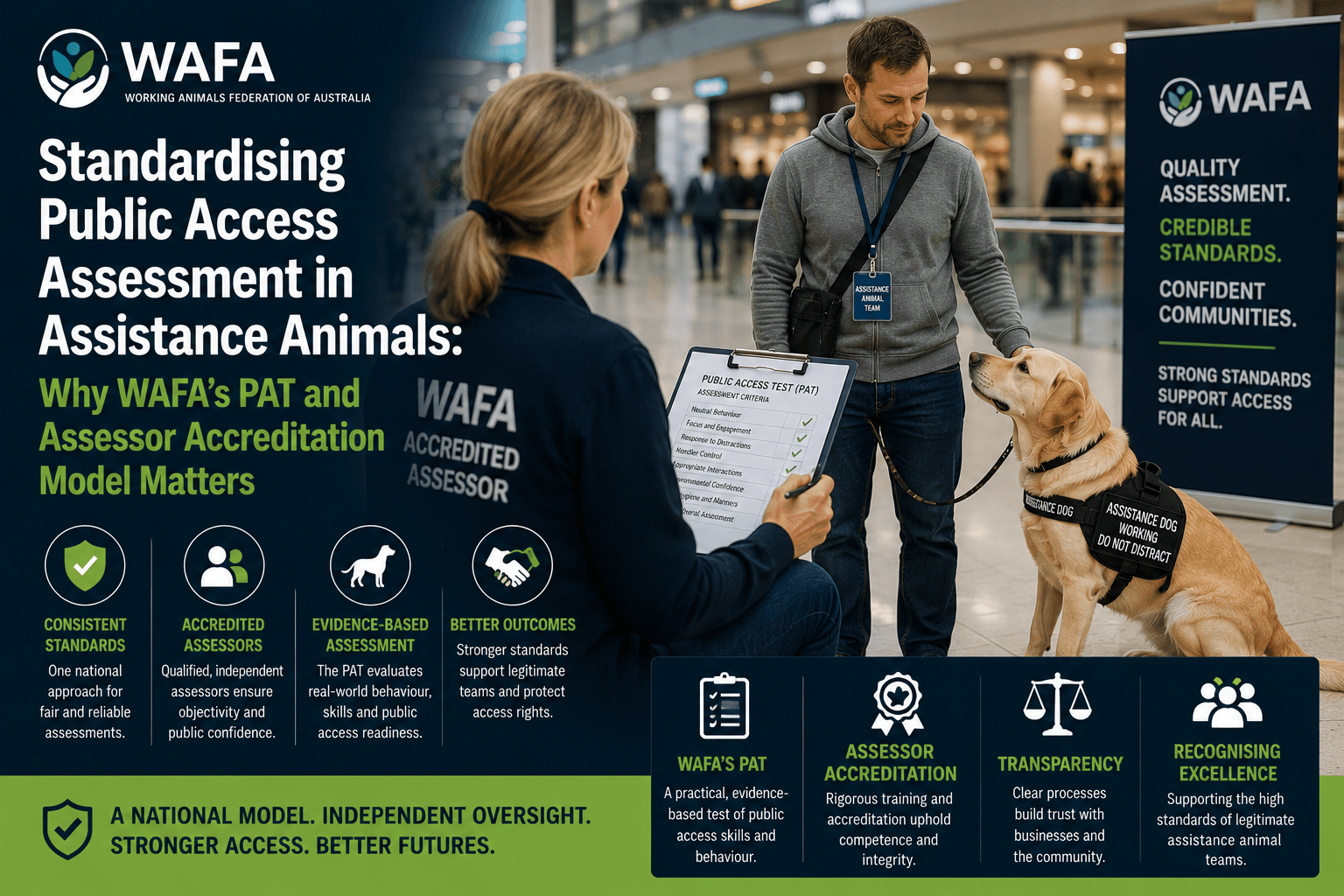
WAFA’s current work is focused on addressing this gap by developing a standardised Public Access Test framework and an assessor accreditation pathway designed to improve consistency, welfare outcomes, and clarity across the sector.

A PAT built from global comparison, not individual opinion

The WAFA Public Access Test framework has been developed through the collection and analysis of more than 200 existing PAT systems from around the world, and is currently undergoing peer review and publication. These include programs developed by large assistance dog organisations, guide dog schools, independent trainers, peak disability bodies, and community-based working dog programs.

Rather than relying on a single training philosophy or organisational model, the aim has been to identify patterns of agreement across systems that already exist. When you compare a large number of credible PAT frameworks side by side, certain expectations consistently appear regardless of country or organisation. For example, most robust systems require that a dog can remain settled in public environments such as cafés without continuous correction, can ignore food distractions on the ground, can walk calmly through crowds without reactive behaviour, and can maintain handler focus under moderate to high sensory load.

Similarly, most systems identify that a dog should not only perform trained tasks on cue, but also demonstrate emotional stability in environments that are unpredictable, noisy, or socially complex. This includes situations like shopping centres, public transport, medical waiting rooms, and outdoor urban environments.

The WAFA approach takes these recurring elements and builds them into a single structured framework so that expectations are no longer dependent on which organisation or individual happens to be doing the assessment.

The goal is not to replace existing systems, but to consolidate what is already widely recognised as best practice into a clearer, more consistent standard.

Why standardisation of PATs is necessary

Without standardisation, the meaning of “passing a PAT” becomes highly variable.

For example, one dog might be assessed in a quiet training facility with controlled distractions, where food is placed at a distance and people are instructed to behave calmly. Another dog might be assessed in a busy shopping centre with unpredictable noise, moving crowds, and real-world interruptions.

Both may be described as having passed a Public Access Test, but the environmental complexity and stress load are entirely different. This makes it difficult to compare outcomes or understand what level of public reliability the dog has actually demonstrated.

Standardisation helps reduce this inconsistency by ensuring that, regardless of where the test is conducted or who is delivering it, the same core expectations are being applied.

It also reduces what is often referred to as “interpretive drift”—the gradual shift in standards over time where assessors unintentionally become more lenient or more variable based on experience, familiarity with handlers, or exposure to different working dog populations.

In practice, this means that a dog assessed in Sydney, Perth, or a regional area is being measured against the same behavioural expectations and welfare thresholds.

The importance of consistent assessor training

A standardised test alone is not enough if it is interpreted differently by different assessors.

One of the most significant issues in existing PAT systems is assessor variability. Even when written criteria exist, the way those criteria are applied in real-world situations can differ significantly depending on the assessor’s background, training philosophy, or experience level.

For example, one assessor may interpret a dog repeatedly breaking heel position in a busy environment as acceptable “situational adjustment”, while another may interpret the same behaviour as a failure of focus and public access control. Similarly, subtle stress signals—such as repeated yawning, lip licking, scanning, or slight avoidance behaviours—may be recognised as early welfare concerns by some assessors, but overlooked by others who prioritise task completion over behavioural nuance.

To address this, WAFA’s model requires that individuals complete a structured nationally standardised assessor accreditation course before they are able to deliver PAT assessments within the framework.

This course is designed to ensure that all accredited assessors are interpreting behavioural indicators in the same way, applying scoring criteria consistently, and recognising the same welfare and performance thresholds.

In practice, this means that assessors are trained to distinguish between a dog that is simply distracted versus a dog that is showing early signs of stress overload, fatigue, or declining public access suitability.

It also means they are trained to separate handler interpretation from observable behaviour. For example, a handler may explain that a dog is “just excited” in a busy environment, but the assessor is trained to identify whether the behaviours observed align with excitement, anxiety, overstimulation, or loss of task focus.

This shared language and shared framework significantly reduces variability in assessment outcomes.

Understanding bias in Public Access Testing

One of the reasons assessor accreditation is so important is that all human assessment is influenced by bias, whether intentional or not. Public Access Testing is particularly vulnerable to this because it sits at the intersection of behaviour, welfare, training history, and real-world context—all of which require interpretation rather than purely objective measurement.

In PAT environments, several forms of bias commonly appear.

Confirmation bias can occur when an assessor expects a dog to succeed based on reputation, previous experience, or confidence in the trainer or handler. In these cases, borderline behaviours may be unconsciously interpreted in a more forgiving way. For example, a dog that briefly breaks position in a café might be seen as “still reliable under distraction” rather than as showing early signs of inconsistent public access control, simply because the assessor already expects a positive outcome.

Relationship bias can occur when the assessor knows the handler or has worked with them previously. Familiarity can influence judgment, sometimes resulting in leniency due to perceived effort, rapport, or previous positive outcomes. Even when assessors are trying to remain objective, prior knowledge of the handler’s circumstances, training journey, or progress can subtly shift how behaviours are interpreted in real time.

Training involvement bias is also a significant but often under-recognised factor. If the assessor has directly trained the dog, contributed to its development, or been involved in shaping its skills, there is an inherent conflict of interest in evaluating that same dog for pass/fail suitability. Even with strong professional intent, there is a natural psychological tendency to see the outcome of one’s own training in a positive light. This can lead to unconscious overestimation of reliability, minimisation of minor gaps, or interpreting partial success as full competence. In practical terms, it becomes harder to separate “what I have taught this dog to do” from “what this dog consistently demonstrates under independent conditions.”

Context bias is also significant. A dog performing in a quiet or familiar environment may appear more stable than the same dog tested in a complex, high-distraction public setting. Conversely, an overly stressful or poorly chosen test environment can unfairly disadvantage a dog that would otherwise function appropriately in real-world conditions. The environment itself becomes part of the interpretation, which can either inflate or suppress perceived capability depending on how the test is structured.

There is also the issue of standard drift, where repeated exposure to lower or higher performing dogs gradually shifts an assessor’s internal benchmark of what “acceptable” behaviour looks like over time. What once would have been considered a borderline pass may slowly become interpreted as adequate simply because it becomes more common within the assessor’s exposure group.

WAFA’s assessor training explicitly addresses these biases so that assessors are not relying solely on intuition or prior involvement, but instead are applying structured, repeatable criteria that reduce subjective interpretation. This includes clear behavioural definitions, consistent scoring frameworks, and explicit separation between training history and current independent performance during assessment.

The aim is not to eliminate human judgment—which is unavoidable in behavioural assessment—but to structure it in a way that reduces the influence of familiarity, expectation, and prior involvement, and increases consistency across different assessors and environments.

Why WAFA’s PAT model is different

WAFA’s Public Access Test is designed to be a synthesis rather than an invention. It does not replace existing systems so much as integrate what already works across multiple established frameworks into a single coherent structure.

The strength of this approach is that it is not dependent on one organisation’s philosophy or one trainer’s methodology. Instead, it is grounded in comparative analysis of over 200 existing PAT systems across different sectors and countries.

This creates a framework that is more stable, more transferable, and more consistent in its expectations.

It also allows for clearer communication between stakeholders. When a dog is described as having passed a WAFA PAT, that statement carries a defined meaning that is consistent across assessors who have completed the same accreditation pathway.

A voluntary system designed to raise standards

Importantly, WAFA’s Public Access Test framework is part of a voluntary quality improvement initiative, not a regulatory requirement.

The intention is not to replace legal frameworks under the DDA, but to provide a structured pathway for those who want greater consistency, clearer standards, and improved welfare oversight in assistance animal work.

This model recognises that meaningful change in this sector is unlikely to come solely from legislation. Instead, it is more effectively driven through shared standards, professional development, and accessible accreditation pathways that encourage consistency without excluding self-trained teams.

In that sense, it is designed as a support system rather than a gatekeeping system.

A familiar model in other working animal sectors

This approach is not unique to assistance animals. Similar models already exist in other regulated or semi-regulated animal working contexts.

For example, in New South Wales, individuals who wish to become Greenhound assessors must complete specific training and meet defined competency standards before they are authorised to assess greyhound suitability. This ensures that welfare and performance assessments are conducted consistently across different assessors, rather than being based on individual interpretation alone.

WAFA’s model follows a similar principle: consistent training leads to consistent assessment, which leads to more reliable outcomes.

An evolving project with open collaboration

This is an active and ongoing project, and WAFA is continuing to refine the Public Access Test framework and assessor accreditation pathway as new feedback and expertise is incorporated.

The intention is to build a system that is practical, evidence-informed, and grounded in real-world working animal experience.

Input from trainers, handlers, veterinarians, disability advocates, and others working in the assistance animal space is welcomed, particularly from those with lived experience navigating public access with assistance animals.

The goal is not to centralise authority, but to build shared standards that improve clarity, welfare, and consistency across the sector.

Conclusion

Public Access Tests are widely used across the assistance animal sector, but their effectiveness is limited by variation in design, interpretation, and assessor bias.

WAFA’s approach seeks to address this by combining a large-scale comparative analysis of existing PAT systems with a structured, nationally standardised assessor accreditation pathway.

The result is a framework that aims to make assessment more consistent, more transparent, and more aligned with real-world working animal welfare needs.

Ultimately, the goal is not just to assess whether a dog can pass a test, but to ensure that public access work is safe, sustainable, and fair—for both the handler and the animal over time.

Why Independent Oversight of Assistance Animals Matters: The Limits of Self-Assessment Under the DDA

Author: virtualsupportsuperstars

Author: C.L. Williams LLM MA MFPol MMPol MEnvSc MSc MBA MDisServ MAutNeu Med MMH

Australia’s Disability Discrimination Act 1992 (Cth) is designed to protect the rights of people with disability to access public spaces with assistance animals. In practice, one of the most significant features of this framework is that it can allow individuals to self-train and self-assess their own animals as assistance animals, then work them in public access contexts.

While this flexibility reduces barriers and increases accessibility, it also introduces a structural weakness that is often not discussed openly enough: when the same person is responsible for training, handling, and assessing the animal, there is no independent reference point to detect gradual change, drift, or decline.

This is not about intent, capability, or care. It is about how human perception works under conditions of familiarity, dependency, and repetition.

The core issue: humans are not good at seeing slow change

One of the most important realities in working animal systems is that people do not reliably notice gradual change in something they see every day.

If you live with a dog, handle them daily, and rely on them for independence, you are not observing them from a neutral baseline. You are observing them through continuity.

That means small changes do not appear as “changes” at all. They get absorbed into what your brain categorises as normal.

A dog that has slowly gained weight over three months does not look “suddenly overweight.” They just look like themselves. A dog that has gradually reduced their willingness to jump into the car, or hesitates slightly before performing a task, does not necessarily look “different.” They look like they are having an off day, or responding to the environment.

This is where several well-known cognitive processes come into play.

Habituation means repeated exposure reduces sensitivity. You stop noticing what you see every day because your brain filters it out as background information.

Normalisation bias means gradual change becomes the new standard. What would have been concerning in isolation becomes acceptable because it has crept in slowly.

Observer bias means expectations influence interpretation. If you expect reliability, you are more likely to interpret borderline performance as acceptable variability rather than early deterioration.

Motivated reasoning can also occur, particularly where the dog is essential for independence. There is an unconscious tendency to interpret uncertainty in a way that preserves continuity and avoids disruption.

None of these are flaws in character. They are standard human cognition. But in working animal systems, they matter.

What actually gets missed in day-to-day handling

Dogs do not decline in obvious, dramatic steps. Most change is incremental, intermittent, and easy to explain away in the moment.

Weight change is one of the clearest examples. A dog might slowly increase or decrease in body condition over weeks or months. Because you see them every day, the change is not visually striking. You don’t compare “before and after” unless something prompts it. The dog still moves, still performs tasks, still behaves in familiar ways—so the change is easy to rationalise. Their harness still fits, they still sit on cue, they still greet you the same way. The weight gain becomes invisible until it is significant.

The same applies in the opposite direction. Mild weight loss, early muscle loss, or reduced fitness can be just as easy to miss, particularly in dogs that are still eager to work or are highly food motivated. Appetite and enthusiasm can mask physical decline longer than people expect.

Structural and gait changes are even more subtle. A dog might begin to shift weight slightly off one limb, shorten their stride by a small amount, or hesitate before jumping into the car. At first, these changes are inconsistent. One day they look stiff; the next day they appear fine. That inconsistency makes it very easy to attribute the issue to surface factors—cold weather, a long walk yesterday, a busy environment, or distraction—rather than recognising an emerging pattern.

Over time, those small inconsistencies can become a pattern that is only obvious in hindsight.

Behavioural drift follows a similar trajectory. A dog might begin to take longer to respond to cues, avoid certain environments slightly more often, or show reduced enthusiasm for tasks they previously performed readily. Because these changes are not absolute, they are often interpreted contextually. “They were tired.” “It was a hot day.” “That environment was overwhelming.” All of those explanations may be partially true, but they can also obscure an underlying trend.

Even hygiene and general maintenance standards can slip without being immediately obvious. Ear infections can start mildly and intermittently. Dental disease progresses slowly. Coat condition may decline gradually due to subtle changes in grooming frequency or underlying health. Nails may become slightly longer over time, altering gait mechanics in ways that are not immediately dramatic but still significant for long-term musculoskeletal health.

The key issue is not that these changes are invisible in principle—it is that they are invisible in practice when you see the same animal every day.

Why self-assessment under the DDA creates structural risk

Under the current DDA framework, individuals may self-train and self-assess their own animals as assistance animals. While this enables access and autonomy, it also removes one of the most important safeguards used in every other working animal system: independent evaluation.

In a self-assessment model, the same person is responsible for:

  • training the dog,
  • working the dog,
  • interpreting the dog’s behaviour,
  • and determining whether the dog is still meeting the required standard.

This creates a situation where there is no external comparison point. No second opinion. No objective reset of perception.

The issue is not dishonesty. The issue is that there is no mechanism to interrupt normalisation.

In practical terms, this can mean a dog continues working in public access settings while:

  • their body condition has gradually shifted outside ideal range,
  • their gait shows early signs of strain,
  • their behavioural responses are becoming less consistent,
  • or their stress tolerance is quietly reducing.

Because none of these changes happen suddenly, they can all be rationalised as temporary, environmental, or minor.

How things “slip” without anyone noticing

In real-world self-managed systems, decline is rarely abrupt. It is cumulative.

A vet visit gets postponed because life is busy, and the dog seems fine. Grooming is delayed for a few weeks because nothing looks urgent. A minor limp appears and disappears, so it is monitored rather than investigated. Training maintenance becomes less structured because the dog is still “mostly doing everything.”

Individually, none of these decisions are unreasonable. In fact, they are normal responses to time pressure and competing demands.

But without external oversight, there is no structured point at which those small deviations are pulled back into alignment with baseline expectations.

Over time, the system shifts. Not dramatically, but gradually. The dog is still working, still present in public, still functioning—but not necessarily at the same standard of health, precision, or welfare that existed earlier in their working life.

The most concerning aspect is that this drift is often not recognised until an external person sees the dog after a period of time and notices changes immediately.

That contrast is the key indicator of how perception adapts internally but remains visible externally.

Why independent oversight changes outcomes

Independent oversight works because it reintroduces comparison.

A veterinarian who sees the dog every six months is not relying on daily familiarity. They are comparing the dog against clinical standards, body condition scoring, musculoskeletal presentation, and objective health markers over time. Small changes that feel invisible to a daily handler become obvious when viewed across intervals.

For example, a vet may immediately notice that a dog has moved from an ideal body condition to a borderline overweight range, even if the handler has not perceived the change. They may detect early dental disease that has not yet caused obvious pain. They may identify subtle asymmetry in muscle development suggesting compensatory movement patterns.

Similarly, an independent trainer who reviews the dog at least every six months brings a functional lens that daily handling cannot replicate. They are more likely to notice reduced precision in task responses, hesitation in previously reliable behaviours, avoidance of specific environments, or increased stress signals during work.

A dog that still “works” in the eyes of the handler may no longer meet best-practice standards in terms of consistency, reliability, or welfare load. External review makes that visible earlier.

The role of mentorship and ongoing professional contact

Beyond formal assessments, one of the most protective factors in self-trained assistance animal teams is ongoing connection to a trainer, mentor, or advocate.

This is not about control or gatekeeping. It is about maintaining an external reference point that is not shaped by daily familiarity.

A mentor can help identify patterns that are hard to see from inside the system. They can ask questions that prompt reassessment: has the dog’s willingness to work changed in specific environments? Are tasks taking longer to complete? Has fatigue increased after workloads that previously felt manageable? Are small behavioural changes becoming more frequent?

They can also provide recalibration when standards drift, not through criticism, but through comparison with expected baselines.

Without that external voice, decision-making becomes increasingly internalised, and internal systems are precisely where normalisation bias operates most strongly.

The broader reality: accessibility needs safeguards

It is important to recognise why self-assessment pathways exist. Many people cannot access formal assistance dog programs due to cost, geography, waiting lists, or eligibility barriers. Self-training provides a pathway where otherwise there might be none.

However, accessibility without structure can create unintended consequences.

The goal is not to remove autonomy. The goal is to ensure that autonomy is supported by systems that protect both the animal and the handler from gradual drift that is difficult to see from within.

Independent veterinary care every six months, regular trainer or assessor contact, and ongoing mentorship are not optional extras in high-integrity working animal systems. They are the mechanisms that keep perception aligned with reality.

Conclusion

Assistance animals are living, changing beings. Their bodies, behaviour, and capacity to work evolve over time in ways that are often subtle, incremental, and easy to miss when observed daily.

Self-assessment under the DDA provides important access pathways, but it also removes one of the most critical safeguards in working animal welfare: independent eyes.

Without external oversight, gradual change can become invisible. With it, early signs of decline, fatigue, or drift can be identified before they become welfare, safety, or performance issues.

The most effective systems do not rely on constant vigilance from a single perspective. They rely on multiple perspectives over time.

That is what keeps both the animal and the handler supported, accountable, and safe.

When Assistance Animals Fail: Why We Need Better Support Systems Instead of Blame

Author: virtualsupportsuperstars

Author: C.L. Williams LLM MA MFPol MMPol MEnvSc MSc MBA MDisServ MAutNeu Med MMH

Assistance animals are increasingly recognised as valuable supports for many Australians with disability. They provide practical assistance, increase independence, support community participation, improve confidence, and can help people navigate a world that is often inaccessible.

However, like all disability supports, assistance animals do not exist in isolation.

They exist within a broader system of training, assessment, matching, funding, regulation, ongoing support, and community understanding.

When an assistance animal placement does not work out, the response should not be blame.

It should be learning.

The reality: not every assistance animal partnership succeeds

There is sometimes an assumption that if an assistance animal does not successfully complete training, is retired early, or does not meet the expectations of the handler, then someone has failed.

Perhaps the handler did not try hard enough.

Perhaps the animal was unsuitable.

Perhaps the program was ineffective.

The reality is far more complex.

Assistance animal partnerships are relationships between two individuals: a person with disability and an animal with their own temperament, needs, preferences, and limitations.

Just as not every person is suited to every job, not every dog is suited to every role.

A highly energetic dog may not thrive in a quiet medical alert role.

A sensitive dog may struggle in environments with overwhelming sensory demands.

A dog with excellent obedience skills may not have the temperament required for public access work.

This is not failure.

This is responsible animal welfare and ethical practice.

The importance of appropriate matching

The foundation of a successful assistance animal partnership is the match between the individual and the animal.

A good program considers:

  • the person’s disability-related needs;
  • the tasks required;
  • lifestyle and environment;
  • sensory needs;
  • communication style;
  • the animal’s temperament;
  • the animal’s health and welfare;
  • realistic expectations for both handler and animal.

A mismatch at any stage can create challenges.

This is why comprehensive assessment, ethical breeding or sourcing practices, appropriate training pathways, and ongoing support are essential.

An assistance animal is not a piece of equipment that can simply be issued, replaced, or expected to perform without considering the complexity of the partnership.

The hidden issue: what happens after placement?

One of the greatest challenges in the assistance animal sector is the assumption that once an animal is placed, the work is finished.

It is not.

Assistance animal partnerships require ongoing support.

Handlers may need assistance with:

  • understanding their animal’s behaviour;
  • adapting training strategies;
  • managing changes in health or disability;
  • navigating new environments;
  • responding to stress or burnout;
  • recognising when an animal needs rest or retirement.
 

Animals also change over time.

Health issues, ageing, environmental changes, family circumstances, and changes in a person’s disability support needs can all affect a partnership.

A responsible system recognises that support does not end at graduation.

When systems fail, individuals and animals carry the burden

When an assistance animal placement struggles, the focus is often placed on the individual handler or the animal.

But sometimes the problem is not the person or the dog.

Sometimes the problem is the system around them.

A person may not have received adequate preparation before placement.

A trainer may not have provided sufficient follow-up support.

A funding system may not recognise the ongoing costs of maintaining an assistance animal.

A person may be left without access to professional advice when challenges arise.

An animal may be expected to continue working without appropriate assessment of their wellbeing.

Without proper systems, both people and animals can experience unnecessary stress.

We need to move away from a culture of blame

A mature assistance animal sector understands that outcomes must be reviewed honestly.

Not every placement will succeed.

Not every dog will graduate.

Not every partnership will last a lifetime.

That does not mean assistance animals do not work.

It means we need systems designed around reality.

Blaming handlers discourages people from seeking help.

Blaming animals ignores their welfare and individuality.

Blaming trainers without examining broader systems prevents meaningful improvement.

Instead, we need transparent review processes that ask:

  • Was the assessment process appropriate?
  • Was the person adequately prepared?
  • Was the animal suitable for the role?
  • Was ongoing support available?
  • Were concerns identified early?
  • What can be learned for future placements?
 

Protecting the welfare of both humans and animals

At WAFA, we believe assistance animal success must be measured by more than whether a dog completes training.

Success means:

  • the person’s disability-related needs are supported;
  • the animal’s welfare is protected;
  • the partnership is sustainable;
  • expectations are realistic;
  • support continues throughout the working life of the animal.
 

An assistance animal should never be viewed as a disposable intervention.

Nor should a person with disability be made to feel responsible for a system that did not provide adequate support.

Building better systems for the future

Australia needs assistance animal systems that recognise the complexity of these partnerships.

This means investing in:

  • consistent standards;
  • ethical training practices;
  • independent assessment;
  • ongoing handler education;
  • professional collaboration between trainers, allied health professionals, and animal welfare experts;
  • accessible pathways for support when challenges arise.
 

The goal should never be perfection.

The goal should be responsible, compassionate, evidence-based practice.

Because when an assistance animal partnership struggles, the answer is not blame.

The answer is better support.

Better support for the person.

Better support for the animal.

And a better system for everyone.

George Wilson: A Life of Comfort, Connection, and Compassion

Author: virtualsupportsuperstars


If you knew George Wilson, you would never forget him.

George was a deaf bulldog with a soft heart, a steady presence, and an incredible ability to sit exactly where he was needed most. For five years, he visited patients, families, doctors, nurses, and care teams in palliative care settings — especially at Port Kembla Hospital — offering comfort during moments when words often weren’t enough.

This is his story.

The beginning of George’s story

George Wilson was named after my father, as they shared the same birthday — 8 May. That connection was special from the very beginning, but I never imagined just how deeply George would come to shape my life, or the lives of so many people he met.

I have spent many years working with deaf dogs, including founding and running Deaf Dog Rescue Australia. Deaf dogs have always held a special place in my heart, and George came into my life during a time of profound grief and personal struggle after I lost both of my parents to cancer.

George became my healing presence first.

He was something steady when everything else felt uncertain. He gave me comfort, companionship, and a reason to keep moving forward during one of the hardest chapters of my life.

But George had a gift — he didn’t keep that comfort for himself or for me. He had a way of sharing it with everyone he met.

George in palliative care

When George began visiting palliative care settings, people quickly noticed something special about him.

People often described it as intuition.

George was trained using hand signals because he was deaf, but he experienced the world differently. He did not simply respond to commands — he responded to people.

He seemed to understand emotions, quiet moments, and the times when someone needed a little extra support.

He would choose where to go.
He would choose who to sit with.
He would choose when to stay.

I often say that you cannot train a dog to understand grief in the way George did.

He just knew.

At Port Kembla Hospital, George became part of the rhythm of care. Staff knew him. Patients looked forward to seeing him. Families asked when he would be visiting. He became a familiar and comforting presence during some of the most difficult moments people experience.

Of course, George was still George — gentle, loving, and very food motivated. He had a particular appreciation for the hospital tear room, especially if there was a possibility of finding scones.

That was part of his charm. He brought comfort, but he also brought smiles, laughter, and moments of normality.

Moments I will never forget

There are many moments with George that will stay with me forever.

One that stands out involved two family members sitting outside a hospital ward, trying to process the heartbreak of losing their father.

George walked over, climbed onto the chair between them, and simply sat there.

No prompting.
No direction.
No expectation.

He stayed with them.

Slowly, their grief shifted. They began to smile and laugh together for a moment. The pain was still there, but George reminded them that they were not facing it alone.

That was what George did best.

He did not take grief away.

He sat beside it.

A dog who changed more than one life

Over the years, I received countless messages from families and healthcare staff about the impact George had on them.

Some shared stories of how his visits brought comfort during end-of-life care. Others spoke about how he provided a moment of relief, connection, or happiness during days that were incredibly difficult.

One story that has stayed with me was from a woman who told me that an interaction with George encouraged her to arrange a breast check. That decision led to an early cancer diagnosis and treatment.

George was not a doctor. He was not a clinician. He did not diagnose illness.

But his presence created moments of connection, awareness, and courage.

The impact of what he gave people continued far beyond the moments he spent with them.

Saying goodbye to George

George very suddenly passed away on 12 October 2022 after unknowingly living with liver cancer for several months.

The date carried a deep emotional significance for my family, as it coincided with an important anniversary connected to my father.

George was deeply loved.

He was also deeply missed.

Losing him was incredibly painful, but I am grateful that his legacy continues through every person whose life he touched.

George Wilson: Ambassador for Therapy Dogs

George’s story is now being contributed to an upcoming book exploring his life and his role as an ambassador for therapy dogs in healthcare settings.

This project is about more than remembering George. It is about helping people understand the important role therapy animals can play in real-world care environments — particularly in palliative care, where emotional support and human connection are such important parts of wellbeing.

Through this book, we also hope to raise funds for the Port Kembla Palliative Care Ward in George Wilson’s memory, giving back to the place where he brought so much comfort and joy.

We want to hear from you

If you knew George Wilson, met him, or were impacted by his visits, I would love to hear from you at admin@workinganimals.com.au.

Your memories, stories, and reflections may become part of this book project. Photos are also warmly welcomed and may be included where appropriate.

You can contribute by sharing:

  • Your personal story or experience with George;
  • Memories from hospital visits or community events;
  • Photos or special moments you captured with him;
  • Reflections on what George’s presence meant to you or your loved ones.
 

No moment is too small.

Often, the smallest moments are the ones we remember the most.

George had an extraordinary ability to remind people that they were not alone.

If his story can continue to do that — through this book and through the voices of those who knew him — then George’s work is still continuing.

Thank you for being part of his story.

Jai Wilson